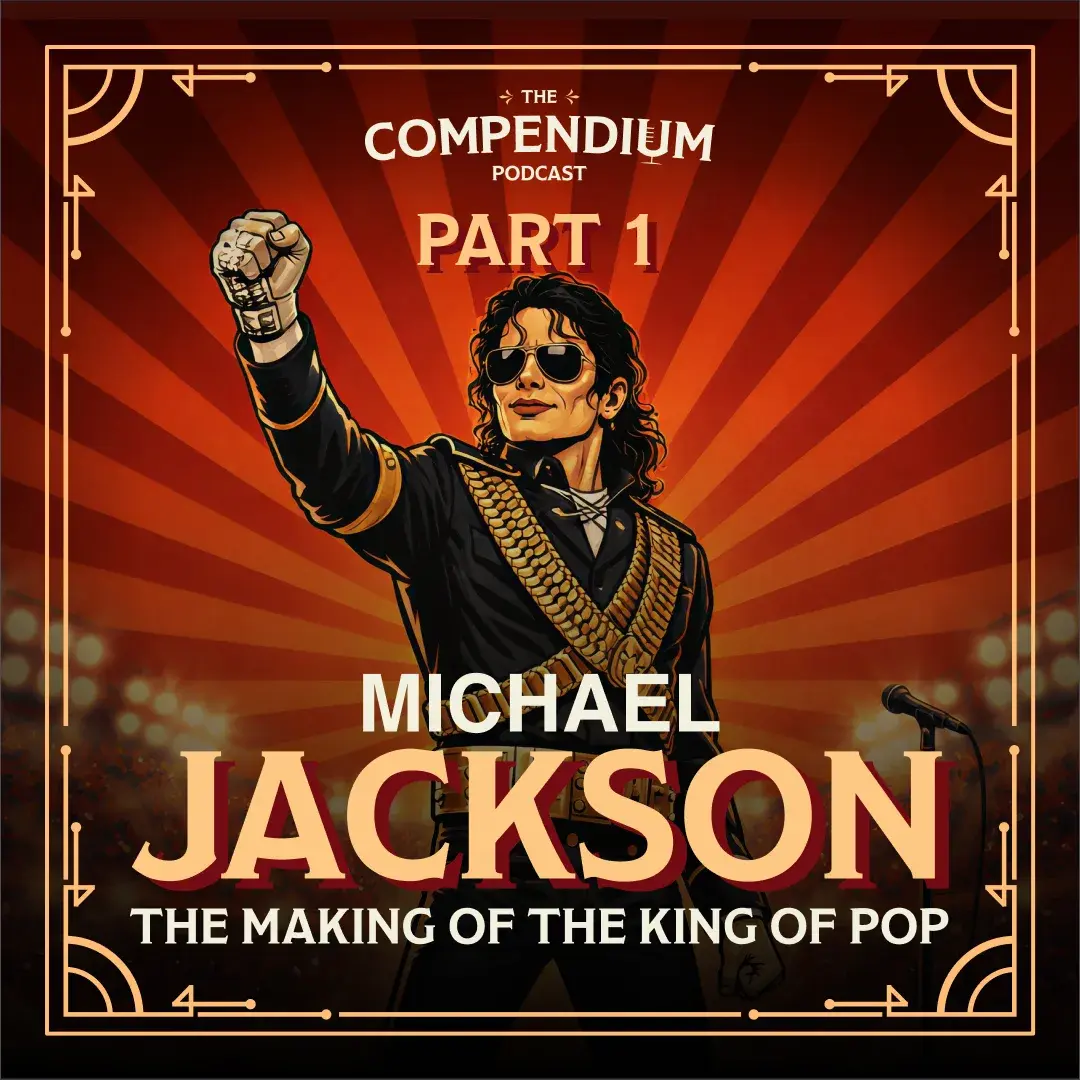
It starts in Gary, Indiana, inside a cramped family home where music, fear, ambition, and discipline were all packed together. From the Jackson 5 and Motown to Diana Ross, Off the Wall, Thriller, the moonwalk, Neverland, and the first allegation that changed everything, this is the story of how the rise was built — and how the damage was already there.
What Happened in Michael Jackson’s Rise to Fame?
Michael Jackson’s story begins long before Thriller. The episode starts with his family in Gary, Indiana, where Joe and Katherine Jackson raised a huge family in a tiny house, and where Joe’s ambition and harsh discipline helped shape the Jackson 5. Michael enters the group as a child, but what stands out almost immediately is not just talent, but instinct: the ability to study performers, absorb their style, and perform with a conviction far older than his age.
From there, the rise is fast. The Jackson 5 break through on the talent-show circuit, reach Motown, and become a sensation. Michael quickly moves from promising child performer to the clear focal point of the group. The episode leans hard into the contradiction at the centre of that success: he is adored everywhere, but privately he is growing up under pressure, in adult spaces, and without anything resembling a normal childhood.
As the story moves into the late seventies and eighties, Michael starts separating from the group and becoming something much bigger. Off the Wall turns him into a major solo star. Thriller turns him into a cultural force. The episode follows the scale of that transformation through MTV, Billie Jean, the moonwalk, the Bad era, and the kind of superstardom that stops looking human and starts looking mythic.
But the episode does not treat that rise as clean or uncomplicated. It threads in the Pepsi burn, the pain management that follows, the growing obsession with appearance, the building of Neverland, and the strange, uneasy world forming around him. It ends at the moment where the first allegation lands and the entire story changes shape, setting up part two.
Why This Story Matters
What makes this story powerful is not just the scale of Michael Jackson’s fame, but how early the cost of it appears. This episode is really about what happens when a child is rewarded for being extraordinary before he has had the chance to become a person first. The success is real, the brilliance is real, but the damage is never far behind it.
It also matters because Michael Jackson sits in that uncomfortable space where pop culture, talent, myth, suspicion, and public hunger all collide. The episode does not flatten him into a saint or a monster. Instead, it looks at how the machinery of fame made him, protected him, distorted him, and eventually left the world trying to sort out where performance ended and something much darker began.
Topics Include
- Joe Jackson, childhood pressure, and the Jackson family home
- The Jackson 5, Motown, and Michael’s breakout voice
- Off the Wall, Thriller, MTV, and the moonwalk
- The Pepsi burn, image changes, and Neverland
- Jordan Chandler and the moment everything turns
Resources and Further Reading
- Michael Jackson - Encyclopaedia Britannica
- The Jackson 5 - Motown Museum
- Michael Jackson - Rock & Roll Hall of Fame
- Pepsi fire left Michael Jackson in pain - Los Angeles Times
[00:00:01] Adam Cox: Michael would later say more than once, that he didn't feel like he had a childhood at all.
[00:00:05] Kyle Risi: And you very often hear people say the reason why he is the way that he is is because
of that
[00:00:10] Adam Cox: His father , Didn't just run rehearsals. He enforced them every day after school over and over again until it was perfect.
And the thing is when things didn't go well, there would be these punishments. It would be with belts, cords, whatever he could reach for.
[00:00:24] Kyle Risi: Wow.
[00:00:26] Adam Cox: The album, Off The Wall, changes Michael from being this childhood star to this fully fledged superstar,
By almost any measurable standard. He is the most famous human being alive.
Sometimes he would share the bed with the boys as if there were kids at a sleepover.
[00:00:41] Kyle Risi: Adam, we can try and rationalize it all you want, but the fact that you have someone who's not your parent sleeping in your bed.
An adult man,
who has the sense of belief that he can have anything and do anything that he wants, that's not normal.
[00:00:55] Adam Cox: It would be staged as this big comeback that the world was desperate to see.
But behind rehearsals, behind all that music, there's a body that's breaking down a man who isn't sleeping, , and one that probably shouldn't have been on stage at all.
[00:01:38] Adam Cox: That really put me off
[00:01:43] Kyle Risi: for our listeners who didn't see that. Basically I'd do that kind of studio thing where people press the button and they point really, like slowly and fluidly.
[00:01:51] Adam Cox: Yeah. Like, over to you.
[00:01:53] Kyle Risi: Over to you. Take it away. We're live.
[00:01:54] Adam Cox: Okay. Right.
Welcome to the Compendium, an Assembly of Fascinating Things, A weekly variety podcast that gives you just enough information to stand your ground at any social gathering.
[00:02:05] Kyle Risi: We explore stories from the darker corners of true crime, the hidden gems of history, and of course the jaw dropping deeds of Hmm. Mediocre people
[00:02:15] Adam Cox: above average.
[00:02:16] Kyle Risi: Yeah. If that,
[00:02:18] Adam Cox: I'm Adam Cox, your ringmaster for this episode.
[00:02:20] Kyle Risi: And I'm Kyle Reese, the compliance marshal for emotional overexposure.
[00:02:25] Adam Cox: Emotional over exposure. Oh,
[00:02:27] Kyle Risi: it's such a problem, Adam.
[00:02:28] Adam Cox: Too much like dramatics.
[00:02:30] Kyle Risi: Well, my job is to ensure that none of our freaks become too sincere, or too well adjusted
basically, if a conversation shows any signs of genuine vulnerability or unchecked self-awareness, or even early stages of personal growth,
[00:02:44] Adam Cox: uhhuh,
[00:02:44] Kyle Risi: I'm required to step in immediately. I've got my clipboard, I've got a lanyard. If anyone says you know, I think this has really affected me, I basically just blow a whistle right in their face, shut that shit down, and the whistle is basically my team signal to a wreck, like a privacy screen around the freak. So the emotion could be contained at a public view, right? And if it does go any further, I bring a laminated chart and I ask him to point to where the feeling first became administratively inappropriate.
[00:03:17] Adam Cox: So guys, if you are new to the show and you want to support us, then the absolute best way to do that is to go and join us on Patreon. You get exclusive perks and signing up free will get you access to next week's episode seven days early.
[00:03:31] Kyle Risi: Yes. But obviously for as little as $5 a month, you could become a fellow freak of the show, which will unlock our entire back catalog, including all of our classic episodes.
[00:03:40] Adam Cox: But let's be honest, the real reason to sign up as a certified freak or a big top tier member is to get access to our exclusive compendium key. Otherwise known as
[00:03:51] Kyle Risi: the crotch dangler. And it's so that we can always be there dangling near your crotch. And remember, if you ever meet up with another freak in the wild who also has their crotch dangler, remember they're dangly pendulums that when they come together, there's a magical force that emits from them and just something magical happens. So if you find one jingle, your CRO anglers near each other,
[00:04:15] Adam Cox: it's actually just a magnet.
And lastly, guys, please follow us on your favorite podcast app and leave us a review. Your support helps others find us and keeps these amazing stories coming.
[00:04:30] Kyle Risi: I think that was my line, Adam.
[00:04:33] Adam Cox: It is, but you know.
[00:04:34] Kyle Risi: Okay. So the next line is, so Kyle, that's enough of the housekeeping, but I guess only you can really say that.
[00:04:41] Adam Cox: Hey, Kyle, that's enough of the housekeeping. Okay. Because today on the compendium, we are diving into an assembly of family pressure, sheer brilliance, and a monumental rise to stardom.
[00:04:54] Kyle Risi: Oh, we're talking about a star. Is this an incredible person episode?
[00:04:57] Adam Cox: It is an extraordinary person.
[00:05:00] Kyle Risi: An extraordinary, not a mediocre person.
[00:05:02] Adam Cox: No.
[00:05:02] Kyle Risi: So I have no idea what that means. Family pressure. Mm mm Kardashians.
[00:05:07] Adam Cox: Okay. Interesting. Are
[00:05:09] Kyle Risi: we talking about Kim Kardashian?
[00:05:10] Adam Cox: No, I'm just gonna jump straight to it.
[00:05:11] Kyle Risi: Go on
[00:05:12] Adam Cox: now. I'll put you outta your misery. You're never gonna get it.
[00:05:14] Kyle Risi: No.
[00:05:14] Adam Cox: We're gonna do actually a two part epic. What, because there's just so much to cover.
[00:05:20] Kyle Risi: I didn't give you a license to do that.
[00:05:22] Adam Cox: Yeah. Here I am doing it. We're gonna be telling the story of Michael Jackson.
[00:05:26] Kyle Risi: Shut up.
[00:05:28] Adam Cox: Yeah.
[00:05:29] Kyle Risi: That's a big one.
[00:05:30] Adam Cox: It is. Hence why it's two episodes.
[00:05:31] Kyle Risi: What, what side of the fence are you on? Did he do it? Did he not do it?
[00:05:35] Adam Cox: I know it's,
[00:05:35] Kyle Risi: did he kind of do it?
[00:05:38] Adam Cox: Well, he's one of the best selling music artists of all time with estimated sales of over 500 million records. Wow. He's had 13 Billboard hot, hundred number one singles, Uhhuh, and is the only artist who've ever had top 10 singles in six decades. And he's one of the most awarded music artists in history.
[00:05:58] Kyle Risi: He was a child star, right? Mm-hmm. So that makes sense. The six decades. So he was like 60 when he died, then.
He's
[00:06:03] Adam Cox: in his fifties.
[00:06:04] Kyle Risi: Yeah. But a lot of these stars, their legacy continues after. Mm-hmm. So I guess they could, he, he could technically be a star that spends 10 decades.
[00:06:13] Adam Cox: Yeah.
[00:06:13] Kyle Risi: If time goes on,
[00:06:14] Adam Cox: that's very much true. But of course, as you alluded to, he has divided, people's opinions. He is this mix of incredible talent. But then there are these deeply polarizing allegations where fans, media and even radio stations are split on whether to celebrate Michael Jackson or distance themselves from him given the allegations in later life.
[00:06:35] Kyle Risi: Yeah, and it's really tricky because he's such a massive star, right? Some people are very willing to overlook some of his past transgressions if they're true or not. We don't know. It's really difficult to know. But when you think of like lesser stars who just get canceled for almost nothing.
But Michael Jackson seems to be the one that's like, he's done some potentially horrific things. And yet people like always have that same argument. You've gotta like separate the the man from the heart. Do you know what I mean? Yeah. And he seems to have a whole pass with that. So I dunno how I feel. It feels like a little bit of a contradiction.
[00:07:09] Adam Cox: But also I think there's a lot of myths and speculation and people manipulating the truth, which kind of clouds, what's real and what's not. Like this fake news. And I didn't realize that until I started researching.
I think there's perhaps these assumptions that people make and maybe that's why, not that he gets a hall pass, but there's still like this air of doubt where people are like, I just dunno how to feel because I dunno what Yeah. Don't
[00:07:30] Kyle Risi: have enough information. Exactly.
[00:07:32] Adam Cox: Yeah.
[00:07:32] Kyle Risi: That's what you'll always get with someone who's such a massive star.
[00:07:36] Adam Cox: Anyway, the point is we're not here to absolve him from any wrongdoing, if indeed he was a pedophile. But I think the thing is, what we're trying to say is that it's more complicated than that. And we will get to that in part two, I promise. But for the first part, we're going back to his roots,
[00:07:51] Kyle Risi: oh, Jackson five,
[00:07:53] Adam Cox: back to his family home. And a father who saw potential and pushed it hard because what comes out of the Jackson household isn't normal talent. It's a child who can perform like an adult and captivate a room before he's even a teenager.
And then it accelerates. There's Motown, there's number one records. There's this global fame. And until by the 1980s, he's not just a star. He's the most famous person on earth.
But underneath it all. There's something else forming a childhood that never really happened. Mm-hmm. And a pressure that doesn't go away.
So this episode is about how that happens and how the same story that builds the biggest star in the world might also be the one that begins to break him.
[00:08:33] Kyle Risi: Wow. Powerful Adam.
Yeah. I can imagine that pressure must have been crazy.
[00:08:39] Adam Cox: Yeah. Now a slight public announcement or disclaimer, Michael Jackson's life and legacy is so huge. There is a good chance we won't cover every single thing in controversy that happened in his life.
[00:08:51] Kyle Risi: So that's a, like a nice way of saying, listen bitch, don't write in. We get it. It's a two parter.
[00:08:58] Adam Cox: We'll try and cover the main bits that we think you need to know to stand your ground at a social gathering.
[00:09:05] Kyle Risi: Mm.
[00:09:05] Adam Cox: Not give a Ted talk at the local university.
[00:09:08] Kyle Risi: Yeah.
[00:09:09] Adam Cox: So, without further ado our episode today, or Michael Jackson doesn't actually start with Michael Jackson.
It actually starts in Gary, Indiana, a city built with a single purpose. Steel.
[00:09:21] Kyle Risi: Okay. Steel, but also, who the fuck calls that town? Gary.
[00:09:25] Adam Cox: I know. That was one of the first things I thought about was like, no offense to Gary's out there.
[00:09:29] Kyle Risi: Yeah.
[00:09:29] Adam Cox: That is not what you name a town.
[00:09:31] Kyle Risi: Yeah.
Is Gary the founder of the town?
[00:09:33] Adam Cox: Yeah. Basically his last name is Gary. I can't remember his first name. And it was founded in 1906 by the United States Steel Corporation and named after its chairman.
But yeah, it's an odd name for a town, but that's the town that the Jacksons grew up in.
[00:09:47] Kyle Risi: Mm-hmm.
[00:09:47] Adam Cox: At their peak, Gary was home to one of the largest steel producing operations in the world. And by the 1960s, nearly 180,000 people lived there. And like many industrial cities at the time, it was deeply segregated neighborhoods divided over race.
This was also a place shaped by movement families arriving from the south during the great migration, chasing stability, chasing opportunity, chasing something better than what they had left behind. Mm-hmm. And among them was a man named Joseph Walter Jackson.
Now he was born in Arkansas in 1928, and at 18, Joe moved to Indiana and like many men in Gary, he found work in the mills. And the hours were long. The labor was, you know, it was tough.
He worked as an overhead crane operator, but it was the kind of work that paid the bills, but didn't really offer much beyond that, there's this kind of repetition of just shift work, getting your paycheck, and Joe started to want something else, something bigger, and that was music.
[00:10:44] Kyle Risi: So he has arrived. He's doing well. He is working in an industrial town, but he's like there must be more.
[00:10:51] Adam Cox: Yeah, exactly. And the person that's gonna share this Journey with him is a lady called Catherine SKUs, what
[00:10:58] Kyle Risi: A name sku.
[00:10:59] Adam Cox: Yeah.
She was born in Alabama in 1930 and at just two years old, she contracted polio, an illness that would leave her with a permanent limp for the rest of her life.
It didn't take away from her love of music. She played instruments, she sang, she carried gospel with her like this, this music that isn't just heard, it's felt, and perhaps this would influence the Jacksons in their early career.
And when she was still a child, the family moved to Indiana, and that, same search for something more.
And this is when she meets Joe in 1947. So they, get it together. They get married in 1949 and not long after they buy a small house on Jackson Street in Gary.
[00:11:40] Kyle Risi: Shut up.
[00:11:41] Adam Cox: Yeah,
[00:11:41] Kyle Risi: kind of Jackson Street.
[00:11:42] Adam Cox: I know. Kind of Uncanny right? That they would
[00:11:44] Kyle Risi: do that. Yeah. Like it's nominal determinism. Is that right? Did I say right?
[00:11:50] Adam Cox: I dunno.
[00:11:51] Kyle Risi: That's where like you, your name is Joe Banker and then you end up becoming a banker. You move on Jackson Street, you end up becoming.
[00:11:57] Adam Cox: A Jackson. Well, you are already a
[00:11:59] Kyle Risi: Jackson. Say they were a Jackson ready.
[00:12:00] Adam Cox: Yeah. But I just thought that was really strange. The Jacksons grew up on Jackson Street.
[00:12:04] Kyle Risi: Yeah, that is pretty funny.
[00:12:05] Adam Cox: So the place isn't much, but it is theirs. And it's inside that house that the Jackson five would be created.
[00:12:12] Kyle Risi: So this is where it all happened.
[00:12:14] Adam Cox: All happened. But the house isn't big. It's very modest. In fact, it's just 672 square feet.
[00:12:21] Kyle Risi: What? Don't they have a million kids?
[00:12:23] Adam Cox: Yeah. This is the thing. It has one bathroom and just two bedrooms, which was about to howl a whole lot of Jacksons.
[00:12:29] Kyle Risi: Yeah, God. A lot of sharing.
[00:12:32] Adam Cox: So over the next 16 years, Joe and Catherine would go on to have 10 children. One of the sons, it's a twin. In fact, sadly dies shortly after birth, but that still means 11 people living in this house.
[00:12:43] Kyle Risi: That is wild. Where are they all sleeping?
[00:12:46] Adam Cox: Well, there's bunk beds. There's very little privacy. there's a constant hubb of family activity.
[00:12:52] Kyle Risi: Hubb, yeah.
[00:12:52] Adam Cox: You're like living in everyone's pockets. You don't get any privacy whatsoever.
[00:12:55] Kyle Risi: You just want silence.
[00:12:56] Adam Cox: , So their mother, Catherine Jackson, she's deeply religious. she's a devoted Jehovah's Witness.
[00:13:02] Kyle Risi: Really? Yeah. They're Jehovah witnesses.
[00:13:04] Adam Cox: Mm-hmm.
[00:13:05] Kyle Risi: God,
[00:13:05] Adam Cox: which meant their world was shaped by her belief, this apocalyptic imagery, discipline routine, and a childhood frame through this kind of end of days thinking.
And even the small details felt different. An obsession with cleanliness to the point of a ritual.
She was rubbing alcohol on their skin. She'd put Vaseline on their faces to look presentable, and she would give them hot potatoes and put them in their pockets, when she sent them to school to keep the cold out.
[00:13:32] Kyle Risi: Oh, okay. No, that's clever because the potato keeps hold of the warmth. That's very smart.
My mom would do the same as well. She'd also do that with boiled eggs. So just before she left the house, she would hold her lunch in her hands and put them in her pocket while she was walking to the bus stop.
[00:13:45] Adam Cox: Oh, really?
[00:13:46] Kyle Risi: Holding a couple boiled eggs and they would keep some warmth on her until she got to the bus stop.
[00:13:49] Adam Cox: And then what? She would crack them open and then
[00:13:51] Kyle Risi: Not, not, probably not on, can you imagine on the bus So they're, they sound like they're resourceful.
[00:13:57] Adam Cox: Yeah, that's right. Joe, however, had left his hopes of becoming a professional boxer in order to support his family as a full-time crane operator.
So in the early 1950s, Joe tried to build something off his own. He and his brother Luther formed a blues band. The Falcons, they played small venues across Chicago, Gary, Hammond, Joe played the guitar and Luther played the saxophone.
And they were pretty good, but not good enough to make it further than what they were already doing, like these small gigs.
So after a few years, the band had faded out, but Joe didn't really want to give up on what it represented. He still had this ambition, which didn't disappear.
[00:14:34] Kyle Risi: So was it just like they were just getting older? The brothers maybe getting married or settling down, they had other commitments, kids and things like that. Is that the kind of thing that would've made it fizzle out?
[00:14:44] Adam Cox: Possibly. And also maybe it just, it wasn't going further than what it was already doing, and I think Joe wanted more. And so I think at the end of the day, they just decided to call it a day.
But one of Joe's sons was left alone one time whilst Joe was working these long shifts as a crane operator, and he started to pick up one of Joe's old instruments playing, experimenting, making noise essentially.
But the children, they were not supposed to touch their dad's instruments. Oh, no. Yeah. But Tito couldn't stay away and he taught himself by ear, picking out melodies from the radio from Motown, blues, anything he could recognize and he would repeat them until they sounded right. And he was getting quite good at it.
[00:15:27] Kyle Risi: You're saying he's basically got perfect pitch. So they're quite talented. Then if that is the case, they're not just like, oh, practice, practice, practice. They have some raw, I dunno, genetic talent
[00:15:38] Adam Cox: I guess. So something that he could just Yeah. Recognize notes and be able to know which ones to play. He wasn't taught himself.
[00:15:45] Kyle Risi: Yeah. That just wind me up so much. You have artists like Charlie Poth for example, who's got this perfect pitch and hearing, like the organ at church every week on this recording, one day he would just be able to go up to the organ and just play when the organist wasn't around and lies because he's got perfect pitch.
[00:16:00] Adam Cox: Mm-hmm.
[00:16:00] Kyle Risi: It's just bizarre.
[00:16:01] Adam Cox: Yeah. So, tito would do all this sort of practicing. And he was pretty good, like I say. But then one day something went wrong, a string had snapped on the guitar.
[00:16:11] Kyle Risi: Oh no.
[00:16:12] Adam Cox: And in that house, that kind of mistake didn't usually end well.
Discipline was immediate, often physical.
[00:16:18] Kyle Risi: For a broken string.
[00:16:20] Adam Cox: Well, Joe was his quite cold father. He wouldn't be the one to say, I love you. And so he would, be quite physically violent with his kids. That's
[00:16:29] Kyle Risi: awful. But then it's not a surprise to me. Obviously, this is quite the knowing thing about. Joe, isn't it? But also Tito, he is, I'm assuming the oldest kid. He's
[00:16:39] Adam Cox: one of the oldest. Yeah,
[00:16:40] Kyle Risi: sure.
[00:16:41] Adam Cox: So Joe had actually, I think either by accident, heard him play one day and instead of getting angry, he actually recognized some really good talent in Tito.
So instead of punishment, Joe buys him a guitar for himself.
[00:16:54] Kyle Risi: Wow. What a stroke of luck.
[00:16:55] Adam Cox: And that was then the start of something because Joe decided to build his new group. And at first it's his older sons Tito on guitar, Jackie and Jermaine on vocals.
And they're joined by a couple of neighborhood friends to fill out the band. And they rehearse in the living room, that 672 square foot house, thin walls, no space, no escape from the noise. The whole family and neighbors are probably forced to listen to their rehearsals.
[00:17:20] Kyle Risi: Yeah. And you have to really love music for this to not be the thing that makes you want to kill yourself.
[00:17:25] Adam Cox: Yeah. And Joe is a hard man to please, because mistakes aren't ignored, they're corrected over and over again until they disappear.
By 1965, the lineup shifts out are the neighborhood friends and in are the younger brothers, Marlon and then Michael at just five years old.
[00:17:44] Kyle Risi: Wow. Okay. So this is the early Jackson five.
[00:17:47] Adam Cox: Yeah. And that's, how they get their name five Jacksons the Jackson Five. And at first Michael isn't actually the lead.
He sings back up, he dances, but even then something stands out the way he moves, the way he watches absorbing everything.
He used to study performers on television like James Brown, Jackie Wilson, the choreography of the Temptations. And he was breaking it down, rebuilding it himself and then performing it with this kind of level of instinct that doesn't feel learned. It feels natural. It's in him.
[00:18:16] Kyle Risi: Yeah, it's quite a cute image actually. I can actually imagine him just sitting there dancing a little way, doing his little cult and dance.
[00:18:24] Adam Cox: That's exactly how I see it. But then it gets better. And by 1966, the Jackson five start entering competitions. Talent shows local contests, and they don't just compete. They actually win again and again.
At one early contest, they play second and the prize was a color television, which might seem small. Uh, but inside that house that meant something. It was proof that this could lead to something.
[00:18:49] Kyle Risi: What does that mean?
[00:18:51] Adam Cox: Well, they're getting rewards and they're winning star. Oh, okay. And I'm with you. Like there's something in this. Sure.
[00:18:57] Kyle Risi: Okay. I just didn't know where that was going.
Adam.
[00:18:59] Adam Cox: They got a TV out of
[00:19:00] Kyle Risi: it. It meant something. So they're like, wow. Okay. So if we've just done this competition and we got a color tv, what else could we get?
[00:19:07] Adam Cox: Yeah, like a radio.
[00:19:09] Kyle Risi: Yeah.
[00:19:09] Adam Cox: Some new shoes.
[00:19:10] Kyle Risi: Yeah. We could get mom that prosthetic shoe. She's always wanted.
[00:19:13] Adam Cox: Okay. 'cause of her limp for Olympia. Wow. So Joe starts driving them further afield to other states, packing the family into a van that can barely hold them all. Chasing the next stage, the next audience, and the next opportunity.
[00:19:27] Kyle Risi: Why are you making it sound like Scooby-Doo?
[00:19:29] Adam Cox: Yeah. Uh, and so the venues keep changing from school halls to then clubs and bars
[00:19:35] Kyle Risi: and Michael Jackson is like six
[00:19:36] Adam Cox: Yeah, exactly. Which is obviously not great news for him. Or even Marlon. The two youngest children that being exposed to adults getting drunk, there's like strip tease acts nice.
And so they're standing in the nice,
[00:19:50] Kyle Risi: sorry.
[00:19:51] Adam Cox: And so they're standing in the wings like. Watching this kind of adult entertainment before they go on stage. And it's pretty normal for other performance back then. But not as a child. No. A child should be hanging out, playing with kids at that point.
[00:20:03] Kyle Risi: Yeah, but to be fair, it doesn't sound like they are hating being in this band. I don't know. I don't know what the psychology is. You've painted it very beautifully. Like a family doing Scooby-Doo, going around, like doing cool stuff. I imagine that they don't hate it.
[00:20:16] Adam Cox: I'm sure there's a lot of good you, right? Like it's fun, it's exciting, but then that does something to a child because the line between being a kid and being a performer kind of disappears.
There's no separation or kind of off switch. They're just constantly rehearsing. You're on stage.
And Michael would later say more than once, that he didn't feel like he had a childhood at all.
[00:20:37] Kyle Risi: Oh,
[00:20:37] Adam Cox: just work. And this expectation of him. And then there's the home life, right? Because. Behind all that success. There's been a lot of discipline and it wasn't gentle. Their father, Joe Jackson, didn't just run rehearsals. He enforced them in hours every day after school over and over again until it was perfect.
[00:20:55] Kyle Risi: Yeah. And you very often you hear people say the reason why he is the way that he is is because as an he didn't have a childhood.
Mm-hmm. Exactly. And as a man, he's almost acting out
[00:21:05] Adam Cox: a
[00:21:05] Kyle Risi: lost childhood. Yeah. Yeah. Like they call him Peter Pan, don't they?
[00:21:09] Adam Cox: Yeah.
[00:21:09] Kyle Risi: But then at the same time, yes, I get, everyone is different and trauma manifests itself differently in everyone.
But you also have to remember, he also has all those siblings as well, right? Nine of them. And a lot of them, yeah. Some of them have trouble in their own lives, but some of them seem to be well adjusted.
[00:21:27] Adam Cox: I think Marlon, out of all of them, from what I read, was one of the most well adjusted, considering he's one of the youngest as well. But then I think. He isn't exposed or, 'cause Michael then goes on to be the front man of the band.
Marlon still gets time to have a bit of downtime, be a kid, whereas Michael's always like the focus. Yeah. So there's a thought that maybe he had a little bit easier than Michael.
And the thing is when things didn't go well, there would be these punishments. It would be with belts, cords, whatever Joe could reach for.
[00:21:57] Kyle Risi: Ooh,
[00:21:57] Adam Cox: Jackie, Tito and Jermaine and even Marlon denied that their father was abusive and said that the whippings. Kept them disciplined and outta trouble, which I would still say is abusive.
[00:22:07] Kyle Risi: Yeah. They're not saying that it didn't happen, they're just, they see it differently, right? And that's very key. 'cause you can be in a really abusive household and years later when you and your family members, they get together and they go, Ugh, do you remember how awful that was? And then they can see things completely differently to how you see it.
[00:22:25] Adam Cox: Yeah. And the thing is, it isn't just physical, it's psychological too. Michael would later talk about the way his father spoke to him, mocking him, criticizing his appearance. Yeah. Breaking down confidence instead of building it to the point where he didn't associate his father with any warmth. He associated him with fear.
He said he would feel sick before rehearsals and that just his presence in the room with him would change everything.
[00:22:48] Kyle Risi: Yeah, and again, I want to go back to that as well. It's about how you as a human being and how you unload information and how you can definitely internalize that differently to the people around you, depending on your personality and Yeah, that does, definitely does seem to be a thing because I don't think that he was, Michael Jackson was necessarily the only person.
In the household. Bearing the brunt of what Joe was doing. Of course, he just internalized it differently and you hear that a lot with, especially with his appearance, how his father from memory, how he would mock him about his big nose. Mm-hmm. Um, his acne and yeah, he really does internalize that.
And you can see why that would be detrimental, because he's also the front man of the band. Yeah. And to be criticized that harshly on your appearance as a front man when you have that responsibility.
[00:23:32] Adam Cox: Mm-hmm.
[00:23:32] Kyle Risi: I can imagine how that would be bad for you .
[00:23:35] Adam Cox: Yeah.
There's also this rumor or allegations that Joe May have sexually abused some of his children.
And that the mother allowed it. Now this is from Latoya Jackson, herself. But her parents, Joe and Catherine, they both deny this. Um,
[00:23:49] Kyle Risi: well of course they would
[00:23:49] Adam Cox: do. Yeah. But she also reveals something quite damning about Michael later in life, which we'll come back to.
But it's interesting that I think she is one of the few Jacksons that kind of speaks out quite negatively about her parents. , And Michael, but there are some reasons why she might have done that.
[00:24:05] Adam Cox: So regardless, I don't think it was easy growing up as a Jackson.
[00:24:09] Kyle Risi: No.
[00:24:10] Adam Cox: by mid 1967, a shift had taken place within the group that everyone could hear Michael's voice, still a child's voice. Had developed a quality that Jermaine simply didn't possess.
And it wasn't just a range or pitch, it was this kind of emotion, an almost unsettling ability to inhabit a lyrics feeling and project it out with this kind of adult conviction.
[00:24:31] Kyle Risi: So basically, Jermaine is out, Michael Zig.
[00:24:34] Adam Cox: Yeah. Joe makes that decision and yeah, I dunno how that went down. But then, I dunno, you're, you're still in the band, you're just standing at the back rather than the front.
[00:24:43] Kyle Risi: Yeah. But, and also, do you really wanna go against Joe?
[00:24:47] Adam Cox: Probably you wouldn't, would
[00:24:48] Kyle Risi: you? No. You'd be just like, okay.
[00:24:49] Adam Cox: Yeah.
Eventually the family are doing gigs in New York and one of which was at the Apollo Theater. Now this wasn't just another venue, it was a proving ground. It's where Ella Fitzgerald, James Brown,
stevie Wonder had been discovered, and it's where audiences would be unforgiving for anyone that didn't meet their expectations.
[00:25:07] Kyle Risi: Oh, okay. So the pressure is well and truly on.
[00:25:11] Adam Cox: Oh, yes. So if you could hold that stage, you could go somewhere. And that night the audience gave them a standing ovation.
[00:25:19] Kyle Risi: Really?
What are they sing
[00:25:20] Adam Cox: some of the songs? Well, actually it would've been any songs that it probably covers and stuff like that.
[00:25:26] Kyle Risi: Oh, okay.
[00:25:27] Adam Cox: And that basically just fueled Joe's ambition for the band to go even further.
[00:25:31] Kyle Risi: Yeah. It's that moment where you go. There's something here.
[00:25:34] Adam Cox: Mm. So next up is an audition with Motown, and it went very well, so well that they secure a proper record deal in 1969.
And that was huge.
Motown was this pioneering record label, and it was owned by this African American who was achieving success with not just black community, but the white audiences at the same time.
[00:25:54] Kyle Risi: Wow.
[00:25:54] Adam Cox: And so its, artists would go on to develop what is known as the Motown sound.
[00:25:58] Kyle Risi: Wow. Yeah. That's so weird that you say that.
'cause ho, honestly, honestly, I thought Motown was a vibe.
[00:26:05] Adam Cox: Same.
[00:26:05] Kyle Risi: Yeah,
[00:26:06] Adam Cox: same.
[00:26:06] Kyle Risi: I didn't think it was a thing.
[00:26:07] Adam Cox: Yeah.
[00:26:08] Kyle Risi: So it was a record company. Yeah. Because when people go, oh, I listen to that Mo Motel.
[00:26:12] Adam Cox: Mm.
[00:26:12] Kyle Risi: You know what I mean?
[00:26:13] Adam Cox: But it they, yeah. The artists at that time was kind of, they ended up developing that sound.
[00:26:17] Kyle Risi: Sure.
[00:26:17] Adam Cox: Okay. But it wasn't originally, which was interesting. I didn't know that either. It's actually a question of who discovered the Jackson five. And like most myths, it obscures a messier truth.
The official story is Jesus one, the marketing team wanted people to believe, and it's the one that's printed on their debut album cover, which is that Diana Ross discovered the Jackson five
[00:26:38] Kyle Risi: shut up.
[00:26:38] Adam Cox: Hence why the album's called Diana Ross presents the Jackson Five.
[00:26:42] Kyle Risi: Okay, well, I mean that's, that's pretty concrete if you've got it on the album cover.
[00:26:49] Adam Cox: Yeah.
[00:26:49] Kyle Risi: But could it just be like they're one, or to associate a name to the Jackson five because it's like, if it's like it's Diana Ross approved in a way. Do you know what I mean?
[00:26:58] Adam Cox: Yeah. It's using the biggest female star in black music presenting the next generation, and so that was a marketing master stroke at the time.
[00:27:08] Kyle Risi: Yeah, sure. That's cute. Diana Ross, whatever happened to her?
[00:27:11] Adam Cox: She's still going.
[00:27:12] Kyle Risi: Is she?
[00:27:13] Adam Cox: I think so.
[00:27:13] Kyle Risi: Oh, I dunno, I dunno much about music.
[00:27:16] Adam Cox: She's still like bouncing up and down with her hair, like flopping side side.
[00:27:19] Kyle Risi: She, well she does that.
[00:27:20] Adam Cox: Yeah. Like a whole kind of, you just go watch her,
[00:27:24] Kyle Risi: I dunno.
[00:27:25] Adam Cox: So she appears at press events. She stands alongside them. She frames the narrative or helps to frame the narrative. The message is clear that this is the future. But the reality was actually the person that brought the Jackson five to Motown's attention was someone else entirely called Bobby Taylor.
And now he is a performer in his own right, but just wasn't like top tier, but close enough to recognize something when he saw it and he watched the Jackson Fire perform in Chicago, and that's when he arranged the audition and that's set everything in motion
[00:27:55] Kyle Risi: but he must have, enough credibility for people to take notice of what he was saying.
[00:27:59] Adam Cox: Yeah. Yeah. He was still known.
But it is true that Diana Ross had formed a close bond with the band in 1969. Michael, now 11 years old, moved in with Diana Ross. Oh. Only for about a month while the rest of the family's living arrangements were being finalized in like a new area.
And Michael lived inside, I guess the orbit of this fully formed star.
[00:28:19] Kyle Risi: I thought you were gonna say he'd lived inside her hair.
[00:28:23] Adam Cox: There's enough to go around. Yeah. And Ross became something like a guide, a mentor, and a close friend, and she showed him what it meant to be a star. Um, 11. A form. Yeah. And you can kind of see it the way that she perhaps holds herself. Like maybe Michael watched that and was inspired by her. Mm-hmm. This kind of persona and everything like that.
[00:28:43] Kyle Risi: Yeah. 'cause you mentioned this before, like he would watch different things on his black and white TV back then and like he would absorb the way that the artists were moving. And the way they were singing.
And it seems like he's quite good at that. ,
[00:28:55] Adam Cox: so in 19 69, 2 months after arriving in California, Motown releases, I Want You Back. And what followed was pretty explosive. The song itself was almost perfect, but above all, that was Michael at just 11 years old.
And the way that he's singing, the way that he's doing this breath control, the way that he bends the notes and slips between different registers, it made it land.
And yeah, he's singing about heartbreak as if he understands it himself, which at 11 years old, probably wouldn't.
[00:29:24] Kyle Risi: Yeah. But again, it's because he is probably picking up on the emotion and the way that people do things on television. Mm-hmm. He probably doesn't necessarily understand it. But he can, sounds like he can emulate it very well.
[00:29:34] Adam Cox: Yeah. And I think that's why people go like, how is this kid doing this?
[00:29:37] Kyle Risi: Yeah. Which makes it impressive. Yeah,
[00:29:39] Adam Cox: exactly. Yeah.
So the song I Want You Back goes to number one. It turns out Michael becomes the youngest artist ever to top the billboard. Hot 100. And then what follows is three consecutive number one singles with A, B, C.
[00:29:52] Kyle Risi: Yep.
[00:29:53] Adam Cox: The Love You Save and I'll be there.
[00:29:55] Kyle Risi: Oh yeah. Great song. So they all went to number one.
[00:29:58] Adam Cox: Yeah. And
[00:29:59] Kyle Risi: consecutively?
[00:30:00] Adam Cox: Yes. And A, B, C knocked the Beatles off the top of the charts at the time. Good. Which was huge. Uh, the press loved it because it wasn't just this success, it was like a succession to the Beatles. Almost cute.
So within nine months, the Jackson five had gone from unknown to the biggest act in popular music. And the world responded exactly how you'd expect by amplifying everything. And by 1971, they had their own Saturday morning cartoon. There was merchandise, there was posters, magazine covers.
[00:30:29] Kyle Risi: They had a cartoon.
[00:30:30] Adam Cox: Yeah. I didn't know that.
[00:30:32] Kyle Risi: Did you watch it?
[00:30:33] Adam Cox: I, no.
I imagine. It's just, adventures they get up to.
[00:30:36] Kyle Risi: Yeah. I imagine that, that sounds good.
[00:30:38] Adam Cox: So at 12 years old, Michael's just become the most famous child in America. But the thing is, Michael is still growing up in an environment where it's, well it's a pretty adult environment, right?
[00:30:48] Kyle Risi: Yeah.
[00:30:49] Adam Cox: They're on tour. The brothers would share hotel rooms. There's no privacy, no boundaries. And his older brothers, teenagers at the time were starting to bring girls back.
[00:30:58] Kyle Risi: Oh, and they're sharing rooms.
[00:30:59] Adam Cox: Yeah. So they would be obviously getting up to stuff with these girls. Whilst Michael and Marlon are in those rooms and they're watching, we're not watching, they're probably pretending to be asleep. Obviously. They're not asleep watching. I mean, it's their first exposure to sex.
[00:31:14] Kyle Risi: Yeah. And he, but, so Michael Jackson at this point is like round about 12, right?
[00:31:17] Adam Cox: Yeah. And he probably don't really understand
[00:31:19] Kyle Risi: what watching. He's definitely watching definitely.
[00:31:21] Adam Cox: I dunno if you'd be watching your brothers do that.
[00:31:23] Kyle Risi: But yeah, he has been exposed to very adult things
[00:31:27] Adam Cox: yeah. 'cause any other 12-year-old is at home playing with their toys, but he's out doing gigs. He's got this extreme pressure to perform. So it's quite complicated. But you can see how he isn't let to be a child.
[00:31:39] Kyle Risi: No. And I guess the pressure is just even more now because they are these big stars.
[00:31:44] Adam Cox: Yeah, exactly. And even with all that success as a band, something else starts to change, I guess. Michael was being separated out gradually though, in 1971. he records without his brothers for the first time.
His debut solo, single got to be there, followed that in October and it worked because his voice didn't need the group anymore. It could carry on its own.
[00:32:05] Kyle Risi: Really. Wow. 'Cause I always imagine, the Jackson five with their very seventies like outfits. Mm-hmm. the Brady Bunch. Yeah. That's how I imagine it. And then there's no transition. It's just bad. In terms of the album Bad with Michael Jackson, this cur hair. Oh,
[00:32:22] Adam Cox: So you've missed out a whole decade.
[00:32:24] Kyle Risi: Oh really? A whole decade.
[00:32:25] Adam Cox: Okay. Again, there's more songs in between that
[00:32:27] Kyle Risi: of course, but I just didn't know that there was a transitional period.
[00:32:30] Adam Cox: Yeah. I don't think he's left the band at this point, but he is starting to have the success by himself.
He Reeses another song called Ben. It's a ballad and it went to number one, Michael's 13. So he is now a solo chart topper. So yeah, he's making it, by himself. And even then it still wasn't enough. Not for Joe, not for the system, and increasingly not for the group themselves, because Motown had controlled everything that they did. Their songs, the production, the direction.
So they didn't really have a lot of say
[00:32:57] Kyle Risi: sure.
[00:32:58] Adam Cox: So in 1975, they left Motown and they signed with another record label, called Epic Records. And it was for better money because at the time, Motown was only paying them like 2.7% in royalties.
[00:33:09] Kyle Risi: Wow.
[00:33:10] Adam Cox: So yeah, pretty bad exploitation at the time. But more importantly, it gave them more control and creative ownership. But leaving, Motown came at cost. Motown actually owned the name, the Jackson five.
[00:33:23] Kyle Risi: Oh, did they?
[00:33:24] Adam Cox: Yeah. So this is when they become the Jacksons. They just drop the five
[00:33:29] Kyle Risi: fine. Smart, yeah. You want, you wanna come after us? Fine. Let's drop the five.
Yeah. Michael's left anyway. Or you could just add another member.
[00:33:36] Adam Cox: I guess too. They've got enough.
[00:33:38] Kyle Risi: Yeah. Just
[00:33:38] Adam Cox: swap one in. It's like a football team.
[00:33:41] Kyle Risi: Bring someone in on a tambourine.
[00:33:43] Adam Cox: next up was this film called The Wiz. Now it was an all black re-imagining of The Wizard of Oz.
[00:33:50] Kyle Risi: Mm-hmm.
[00:33:50] Adam Cox: Michael plays the Scarecrow and Diana Ross Stars alongside him.
And the film itself
[00:33:55] Kyle Risi: as the Scarecrow as well.
[00:33:58] Adam Cox: He borrows their hat, but the film itself doesn't really do that well. But something else happens 'cause Michael meets a guy called Quincy Jones. Now Quincy Jones is this record producer and it's his partnership with Michael that elevates Michael even further.
So Quincy and Michael would work on the next three albums of Michael's together. The first being an album called Off the Wall, which was released in August, 1979. It changes Michael from being this childhood star to this fully fledged superstar, incorporating sounds of disco, funk, pop, r and b, all fsed into something seamless.
[00:34:34] Kyle Risi: Ooh. So something new like a fusion.
[00:34:37] Adam Cox: Yeah. Now these are the songs that you'll start to recognize.
[00:34:39] Kyle Risi: Go on then. Let's see.
[00:34:40] Adam Cox: Don't Stop Till You Get Enough.
[00:34:42] Kyle Risi: Yep.
[00:34:42] Adam Cox: Rock With You.
[00:34:43] Kyle Risi: Yep.
[00:34:43] Adam Cox: They both reach number one and the album sells over 20 million copies worldwide.
[00:34:49] Kyle Risi: Yeah. And I definitely get the disco coming through
[00:34:51] Adam Cox: Mm.
[00:34:51] Kyle Risi: In those songs.
[00:34:52] Adam Cox: Yeah. It won a Grammy, for best r and b vocal performance, but it didn't win Album of the year. And that really mattered to Michael. Oh. More than people realized. 'cause it wasn't just a missed award, it was a signal that even at that level that he was at, he still was being overlooked by someone else.
And so for him, he was like, I'm gonna be really determined my next album, it's gonna be my biggest yet. I will not be overlooked.
[00:35:18] Kyle Risi: Wow.
[00:35:18] Adam Cox: And so he makes the album Thriller.
[00:35:21] Kyle Risi: Ah, sorry. Yeah, I do now see the transition.
[00:35:24] Adam Cox: Yeah. Now the budget for this album was 750,000 uh, dollars.
[00:35:29] Kyle Risi: Wow. That's a lot.
[00:35:30] Adam Cox: It was expensive for the time. And Michael writes four of the nine tracks on the album himself. Wanna be starting something. The Girl Is Mine, beat It and Billie Jean
[00:35:40] Kyle Risi: Great songs.
[00:35:41] Adam Cox: And that's released in 1982, and the album is a phenomenal success. 37 non-consecutive weeks at number one. It's the biggest album of 1983 and 1984.
. Billie Jean holds number one for seven weeks and beat it with the guitar solo from Eddie Van Halen holds it for three.
So it is, massive. And that album actually goes on to sell 70 million copies worldwide.
[00:36:10] Kyle Risi: That is nuts. But what about Thriller? With the like really incredible dance sequence of him being a zombie
[00:36:18] Adam Cox: Yeah, that was obviously a huge success. I was gonna come onto it, but, did you know like the music video was almost like a, it's a short film. Yes. Yeah, yeah. Um, 13 minutes long and it's a full narrative, but this horror inspired and it's all cinematic and it was huge.
And it said that this album helped to conquer racial divides, and it also has the highest royalty rate in music industry at this point. What
[00:36:39] Kyle Risi: does that even mean?
[00:36:40] Adam Cox: Well, for every $2 of every album sold, I think Michael gets a royalty from
[00:36:45] Kyle Risi: it.
Okay. So he was smart, right? He was this is gonna be my retirement.
[00:36:48] Adam Cox: Yeah. And it's huge. And at the time, MTV was still pretty new and its programming leaned almost entirely towards White rock artists. 'Cause when Billy Jean was submitted, they initially refused to play the record.
[00:37:02] Kyle Risi: Really?
[00:37:02] Adam Cox: Yeah.
But then eventually they gave in. And when the video went into rotation, Michael is now in his iconic look with the pink shirt, the black jacket, the white socks moving across the pavement that lights up underneath his feet.
Yeah. It became the most requested video on the network Uhhuh. And in doing so, it basically helped elevate MTV into kind of, it's this big cultural phenomenon
[00:37:25] Kyle Risi: wow. Single handedly made MTV
[00:37:27] Adam Cox: Well, didn't single handedly.
[00:37:29] Kyle Risi: No. Come on, let's just say that.
[00:37:30] Adam Cox: But you know, it just. It was big, then came Thriller, which was this kind of short film. It was 30 minutes long and it was this full narrative, all horror inspired.
But Michael himself had some concerns. 'cause as a practicing Jehovah's Witness, it doesn't really fit with that.
Yeah. So like, well, how does he react to that?
Well, at one point he even considered having the negatives destroyed after shooting it, but was persuaded not to. And he, I think it just adds a disclaimer,
[00:37:55] Kyle Risi: do you think he would've changed his tune? Today if he was still alive about that. Because it's it's it that, did it sell really well? The song?
[00:38:03] Adam Cox: I think it did. I dunno if it went to number one actually, but it did become the first music video ever inducted into the National Film Registry. It's made like history
[00:38:12] Kyle Risi: Sounds important.
[00:38:13] Adam Cox: It was important. I
[00:38:14] Kyle Risi: dunno what it means, but it sounds,
[00:38:15] Adam Cox: I it's in the National Film Registry. I just said it, Kyle.
[00:38:18] Kyle Risi: ' cause I mean that is one of the songs that it's a slow burner. 'cause every year it gets fished up. Right. So it's, it's seasonal, if you will, comes out every year on
[00:38:27] Adam Cox: Halloween.
[00:38:27] Kyle Risi: Halloween,
[00:38:28] Adam Cox: yeah.
[00:38:28] Kyle Risi: There's always flash answers. Probably the biggest song that people do a flash dance for.
[00:38:32] Adam Cox: Yeah.
[00:38:32] Kyle Risi: So yeah.
Choreography on point.
[00:38:35] Adam Cox: And I remember I tried to recreate it as part of A-G-C-S-E project.
[00:38:38] Kyle Risi: Did you?
[00:38:39] Adam Cox: I mean, I don't ever wanna see that footage. Did you
[00:38:41] Kyle Risi: do ly?
[00:38:42] Adam Cox: No.
[00:38:42] Kyle Risi: I
[00:38:42] Adam Cox: don't even think we even had makeup. We were just dancing in a park. But, yeah, it inspired me Kyle,
[00:38:47] Kyle Risi: to do what?
[00:38:48] Adam Cox: To make that video.
[00:38:49] Kyle Risi: Oh, sorry. Yeah.
[00:38:52] Adam Cox: And so the album is a huge success, as we said, and this time it does earn eight Grammy awards. So, you know,
[00:38:58] Kyle Risi: eight.
[00:38:59] Adam Cox: Yeah. Michael gets his wish.
[00:39:00] Kyle Risi: God, can you imagine going upstage eight times? You would just imagine the Grammy acceptance speech just fading out after each time. By the end it's like, thanks, walk off stage.
[00:39:10] Adam Cox: It's is there any more I should collect while I'm up here?
[00:39:12] Kyle Risi: Yeah, because you have to gush over, right? Yeah. Like they love me. They really love me. This means so much. And by the eighth one, you like,
[00:39:18] Adam Cox: can I get a bag?
[00:39:19] Kyle Risi: Yeah, yeah. I get it.
[00:39:22] Adam Cox: so then in 1983, NBC broadcasts Motown 25 yesterday, today, and forever. So it's this celebration of 25 years of Motown, and so it brings, a reunion of all these different artists that defined that era, including, the Jacksons, 47 million people tune in to watch.
[00:39:40] Kyle Risi: Wow.
[00:39:40] Adam Cox: So Michael does a performance with his brothers. It's great. But what he's remembered for is his, solo performance of Billie Jean, and he'd been working on something special.
[00:39:49] Kyle Risi: So what, this is the same night, right?
[00:39:51] Adam Cox: Yeah,
[00:39:51] Kyle Risi: same night. So the same night they, Jackson Fives, they come along, they do their little group thing together.
Mm-hmm. So like a, it's a reunion. Mm-hmm. And then Michael goes off and does, his solo thing.
[00:40:01] Adam Cox: Yeah.
[00:40:01] Kyle Risi: Everyone remembers that. What a kick in the face for Jackson Five.
[00:40:06] Adam Cox: Yeah. But it was an iconic moment.
[00:40:08] Kyle Risi: John, what does he do?
[00:40:08] Adam Cox: Because he is been practicing this particular move.
So he'd learned it from a dancer named Gar Casper.
He basically, he's dancing, he's performing, he's doing his usual like t twelves and stuff like that. Then he steps back, then again, and he guides across the floor Uhhuh, and he's just done the moonwalk for the first time.
And it's only for a few seconds. But in that moment, backstage performers, people on TV are like, wow, what the hell was that?
[00:40:31] Kyle Risi: What the hell just happened
[00:40:33] Adam Cox: the next morning? Fred Astaire calls him personally because he's just seen something truly special.
[00:40:38] Kyle Risi: Who's Fred Astaire?
[00:40:39] Adam Cox: He's like a dancer.
[00:40:40] Kyle Risi: I thought you were gonna say him like a magician. And he was like, how did you do it?
[00:40:44] Adam Cox: Yeah. But anyway, it like, it it's a huge thing that he does and.
Yes. You had Elvis. Yes. You had Frank Sinatra and all these classics, but now there's Michael Jackson. Mm-hmm. He's this modern day superstar.
[00:40:56] Kyle Risi: Yeah. Crazy. This is my Michael Jackson era. Jackson five. . I could get on board with that
[00:41:02] Adam Cox: eighties Jackson though.
[00:41:03] Kyle Risi: Yeah.
That's it. It's the hair. It's the look like he was sexy.
[00:41:07] Adam Cox: Yeah. He's an attractive young man.
[00:41:09] Kyle Risi: Yeah. Sexy.
[00:41:10] Adam Cox: Next up is his third album. Now Michael writes the majority of the album and it's big. It sells 2.25 million copies in its first week. It's not as big as his second album. That was huge. But it's still pretty, it's still pretty impressive.
[00:41:25] Kyle Risi: So what's it called?
[00:41:27] Adam Cox: It's called Bad.
[00:41:27] Kyle Risi: Okay. Which has the song Bad on It.
Bad.
[00:41:30] Adam Cox: Yeah.
The title track video was directed by Martin Scorsese, an 18 minute video.
[00:41:36] Kyle Risi: Shut up Martin Scorsese.
[00:41:39] Adam Cox: Yeah.
[00:41:40] Kyle Risi: And it's 18 minutes as well.
[00:41:42] Adam Cox: Well, he doesn't do anything short, does
[00:41:44] Kyle Risi: he? No, he doesn't. He's re noun for his long productions.
[00:41:47] Adam Cox: So then there's The Bad World Tour, which was 123 shows across 15 countries.
One of the shows was in July, 1988 at Wembley Stadium, and there was a famous person in that crowd, which we've covered.
[00:41:58] Kyle Risi: Diana Ross?
[00:41:59] Adam Cox: No, princess Diana.
[00:42:01] Kyle Risi: Oh, sorry.
[00:42:03] Adam Cox: We covered it in one of your episodes. Yeah. And what did we talk about in that episode?
[00:42:06] Kyle Risi: Before the show, um, Princess Diana and Prince Charles were there, and Michael Jackson was getting a chance to meet them, and he was going through.
He shook Diana's hand and she was like, are you gonna be playing Dirty Diana? And he was like, uh, uh mm. We were told it wouldn't be appropriate. And she was like, no, it's my favorite song. And so he cut in dirty Diana into the concert?
[00:42:29] Adam Cox: Yeah. He, he put it back in and yeah. And they only met once at that time.
[00:42:33] Kyle Risi: Oh really?
[00:42:34] Adam Cox: Yeah.
[00:42:34] Kyle Risi: I just assumed that they had a friendship.
[00:42:36] Adam Cox: No, there was news reported, like everyone else, like he was really upset when Diana died and I think he postponed one of his gigs, when he was on tour. So I think he had a lot of affection for Princess Diana.
[00:42:46] Kyle Risi: I mean, who wouldn't? It is Princess Diana, right?
[00:42:49] Adam Cox: Mm-hmm. And then in 1989, his good friend Elizabeth Taylor, she, gives him the title, that never Leaves him the King of Pop.
[00:42:57] Kyle Risi: That just what, that just spur of the moment. She was like, he's the king of pop.
[00:43:00] Adam Cox: Mm.
[00:43:00] Kyle Risi: And then so the media rolled with it.
[00:43:02] Adam Cox: Yeah.
[00:43:03] Kyle Risi: And to think that he was friends with Elizabeth Taylor.
[00:43:06] Adam Cox: He, I mean, he's friends with a lot of really cool people.
[00:43:08] Kyle Risi: True, true, true. He is one of the most famous men in the world, but Wow. King of pop. And so that stuck.
[00:43:13] Adam Cox: And so yeah. We know enough about Michael Jackson to know this incredible elevation to superstardom
[00:43:20] Kyle Risi: Mm.
[00:43:20] Adam Cox: Had its problems. And we know how it ends. And it's around this time, well, a few years, I think earlier than his third album, that certain events happened that would set Michael on this path to a premature death.
After that performance of Billie Jean and the moonwalk on tv. In 1984 in Los Angeles. Michael Jackson is filming a Pepsi commercial and on the sixth take the pyrotechnics fire to early and too close and his hair catches fire.
[00:43:47] Kyle Risi: Ah, yeah. This is a monumental moment, isn't it? It is credited with causing a lot of things. It's like a cascading event that's all like pinpoints to this particular moment.
What happens?
[00:43:59] Adam Cox: Obviously, as hair catches a light, the crew rush in, they extinguisher and he's taken to hospital with second degree burns to his skull. Wow. Whilst he's treated, and it is an accident, there is a settlement of $1.5 million with Pepsi. Michael even donates that money to a hospital's burn center, which is later renamed in his honor. But the thing that's important at this point is whilst he has surgery to heal some of those scars, he starts to wear wigs, of course, after this. Yeah. 'cause his hair doesn't grow back like it was.
[00:44:28] Kyle Risi: And I guess that affects him quite, psychologically, right? Because his image is a big thing.
But yet he manages to sustain. Second degree burns on his scalp.
[00:44:37] Adam Cox: Yeah. So there's of course the appearance that he has to now live with that. But there's also pain, and a way that he manages that pain at the time. He's prescribed medication and is pretty strong and people close to him would later point out that it's this moment, that he starts this dependency of painkillers
[00:44:54] Kyle Risi: really.
[00:44:55] Adam Cox: Which was, I guess maybe nothing at first, but would be a constant in his life and play a part in his death.
[00:45:00] Kyle Risi: Yeah, that's crazy. And because he's such a big superstar, right? Like of course when it comes to like heavy pain medication, like doctors don't just willy-nilly hand them out, they will say no.
But when you are the biggest star in the world and you have access to your own private physicians where they are on your payroll. You don't say no to that.
[00:45:19] Adam Cox: Yeah. And equally if they do, then you just sack them and get someone else that will.
[00:45:22] Kyle Risi: Exactly. And so I can see very clearly how he could easily get dependent on pain medication.
[00:45:30] Adam Cox: Yeah, we'll also learn later that, he develops this insomnia and so some of the pain medication that he'd get would just, make him drowsy and help him sleep.
[00:45:39] Kyle Risi: Oh, so he just needs to shut off.
[00:45:40] Adam Cox: Yeah.
[00:45:41] Kyle Risi: Mm. Sad. And yeah, this is the biggest moment, right? That kind of is accredited with the slow brewing decline.
[00:45:50] Adam Cox: Yeah, absolutely. And then the other thing around this time, that would plague Michael Jackson, himself at least, was the thought that somebody was out to kill him.
[00:46:00] Kyle Risi: Oh God.
[00:46:00] Adam Cox: And one of those reasons started in 1985 between his album Thriller and Bad. And during collaborations with Paul McCartney, Michael learned something that the real money in music isn't about performance, it's ownership and publishing rights.
[00:46:14] Kyle Risi: Sure. Which he's had a taste of because he managed to secure that, uh, 2% of all the, the money from Thriller.
[00:46:21] Adam Cox: But I guess it's not just about his catalog, it's about other people's music catalog.
[00:46:25] Kyle Risi: Oh.
[00:46:26] Adam Cox: So when the, a TV Music catalog comes up for sale, it's around 4,000 songs in this. Okay. Including the works of John Lennon, Paul McCartney, himself, songs from Elvis, little Richard Cher, rolling Stones, Bruce Springsteen, the Pointer Sisters
So some really big names, big songs like, Hey, Jude, let it Be.
[00:46:44] Kyle Risi: Yeah. Huge, huge artist. Don't tell me he buys all of their stuff.
[00:46:48] Adam Cox: Yep. He buys the rights to all 4,000 songs for $47.5 million.
[00:46:54] Kyle Risi: And how does that pay off for him?
[00:46:55] Adam Cox: Well, McCartney, who makes him aware of all this, um, he wanted the catalog himself. He is furious.
[00:47:01] Kyle Risi: Yeah.
[00:47:02] Adam Cox: And their relationship never recovers after that.
[00:47:04] Kyle Risi: Well, it's business babe.
[00:47:05] Adam Cox: But financially owning this catalog, it's transformative because by 1995, Michael merges the catalog with Sony to create Sony a TV. It's a joint venture, and he retains 50% of rights. And by the time of his death, that catalog is valued at around $1 billion.
[00:47:23] Kyle Risi: Wow, what an investment. So he bought it for 48 mil. And now was worth a billion dollars. Yeah. Paul McCartney, he's completely justified to be really pissed off.
[00:47:32] Adam Cox: Yeah. He's definitely missed the boat on that.
[00:47:34] Kyle Risi: But it was also a lot of it's his work as well.
[00:47:36] Adam Cox: Yeah. Which is, which
[00:47:37] Kyle Risi: brought up,
[00:47:37] Adam Cox: that's the thing, probably Paul McCartney wanted it because it was his work.
[00:47:41] Kyle Risi: Yeah.
[00:47:41] Adam Cox: But the thing is, by 2016, so this is, is it eight years after his death? Something like that? Sony acquires his estates share of the catalog and it's estimated that it's around 4 billion. Wow. So at this point,
[00:47:54] Kyle Risi: It's swelled.
[00:47:54] Adam Cox: Yeah. And just think it's probably still growing even now.
[00:47:57] Kyle Risi: So what we're saying, correct, if I'm wrong, is the vast majority of his wealth and his status and his estate comes from those 4,000 songs.
[00:48:07] Adam Cox: Well, a good chunk, obviously he's wealthy in other areas. Sure. But this was, yeah.
[00:48:11] Kyle Risi: Yeah. Well, you said that this is where he realizes that the money is in ownership rights.
[00:48:16] Adam Cox: Mm, yeah. Wow. And so having this, extraordinary wealth and this catalog, he thinks it makes him a target. And in the final years of his life, he tells people that someone is going to kill him for it.
[00:48:29] Kyle Risi: I dunno if that's a bit of paranoia or whether or not there's a genuine, like cause for concern there. Because at the end of the day, these are very powerful people. Very litigious. Yeah. You can go and kill Michael Jackson, but his estate then moves on according to his will and contracts and things like that to someone else.
Doesn't mean that you automatically get it.
[00:48:50] Adam Cox: Yeah.
I think it is paranoia, if I'm honest, but no doubt there were probably threats to his life at various moments.
[00:48:56] Kyle Risi: Mm-hmm.
[00:48:57] Adam Cox: Whether it was over this, I'm not sure, but this is what, Michael believed.
[00:49:00] Kyle Risi: Yeah. Wow.
[00:49:02] Adam Cox: . Then in 1993 in Pasadena, the Super Bowl Halftime Show mm-hmm. Is happening.
[00:49:08] Kyle Risi: Ah,
[00:49:09] Adam Cox: and for the first time, a global music superstar takes that stage and it's iconic. Not because of the movement, but because of
[00:49:16] Kyle Risi: what he doesn't do
[00:49:17] Adam Cox: well. Yeah, that's right. There's this stillness, right?
[00:49:19] Kyle Risi: Yeah.
[00:49:20] Adam Cox: He walks out on that stage and he doesn't,
[00:49:21] Kyle Risi: nothing. No, he doesn't, he doesn't walk out.
[00:49:23] Adam Cox: Oh, it's not,
[00:49:23] Kyle Risi: he gets catapulted up from the ground.
[00:49:26] Adam Cox: Oh, yes, that's right.
[00:49:27] Kyle Risi: And then like he does this kind of like weird jump and then his legs come up really high and then he just boom on the ground and he just stands over there. Iconic, iconic kind of pose with his aviator glasses, his curly hair, and he's just looking in the distance for what seems like, and I dunno if you've got the number there, but for ages and it's just the crowd around him is just going nuts. But he's dead still.
[00:49:53] Adam Cox: Yeah.
[00:49:54] Kyle Risi: For so long. The Super Bowl halftime show is only 15 minutes and he stood there for what felt like
[00:50:00] Adam Cox: 90 seconds.
[00:50:01] Kyle Risi: Oh, okay. What felt like 14 minutes. Yeah, but you are right. There was a long period of time of that halftime show where he does nothing and the crowd are like, oh my God, gimme more. Yeah, someone poke him. Wow. Yeah. Very iconic moment. And he looked amazing.
[00:50:21] Adam Cox: Yeah. And so the excitement just builds.
And then when he does move, like the stadium erupts and he performs medley of Jam, Billie Jean Heal the World. And for the first time in Super Bowl history, viewership increases during halftime. And that had never happened before because up until that point it was kind of like this background sort of break.
And, you know, people would go away and pee during that point.
[00:50:43] Kyle Risi: Sure, yeah.
[00:50:43] Adam Cox: After that moment, Michael Jackson had just created the revolutionized Super Bowl halftime show, everything that comes after, like Prince Beyonce, Shakira, Janet Jackson's nipple.
[00:50:55] Kyle Risi: Mm-hmm.
[00:50:55] Adam Cox: Did you remember the incident with, Janet Jackson's nipple?
[00:50:58] Kyle Risi: Yes. And like you could probably do an entire episode on that because it's such great commentary on the gender dynamics between how men and women are treated.
Not just in kind of pop culture world, but society is outrageous. And I saw that nip and I'm like, babe, that is some hardcore jewelry that you've jazzed that nip up with. Good on you. I don't know why she got so much backlash.
[00:51:26] Adam Cox: They said it was an accident that, Justin Timberlake was supposed to rip it and there's supposed to be like a red, lacy bra there that would cover up.
So I think you're still supposed to see, this nipple shield is what they call it.
[00:51:35] Kyle Risi: But that's the thing though. I think that's what they were saying. Yes, damage control. But the fact that she had a nipple shield on like when it was, why would you have that under your bra? What's the practical purpose of that?
It's like you walking around with, I don't know, I guess people walk around with Prince Alberts on and nobody gets to see it. It's not like you're gonna be showing it off.
[00:51:56] Adam Cox: I hope not.
[00:51:56] Kyle Risi: I don't know. Maybe each the, I don't know. I don't have breasts. I can't comment.
[00:52:01] Adam Cox: You can have nipple shields, Scott.
[00:52:03] Kyle Risi: I could do if it's an option, but really I'm bit of a, I'm a bit of an attention hall, so if I'm wearing a nipple shield, people are seeing that nipple shield. Do you know what I mean? I'm like at your house on Sunday night having like tea with your mom and I'm like, Hey, Sandra, to this out,
[00:52:19] Adam Cox: lo out a nipple,
[00:52:20] Kyle Risi: lob out a nipple with a massive sun on it.
And I know your one would be like, oh, that's nice.
[00:52:25] Adam Cox: Look at mine. That was a nice day for you.
[00:52:31] Kyle Risi: Yeah. That's it. It's a mother and son-in-law. Bonding.
[00:52:37] Adam Cox: So anyway, halftime show, it's huge because of Michael Jackson plus all the big movie trailers that get released at that time. All of that is basically sits inside the blueprint that he created that day.
[00:52:47] Kyle Risi: Wow.
[00:52:48] Adam Cox: So Michael Jackson at this point has sold more records than any solo artist in history. He's redefined the music video. He's reshaped MTV, he's transformed the Super Bowl. He now owns the most valuable music catalog on Earth.
By almost any measurable standard. He is the most famous human being alive. But by the point in 1995, Michael Jackson's appearance had significantly changed.
Now, for starters, he had much lighter skin, white, in fact, and it wasn't until 1993 in a live interview with Oprah Winfrey, watched by 90 million people.
He explains that back in 1983, he's diagnosed with discoid lupus, an autumn immune condition affecting the skin. And then a few years later, he's diagnosed with vitiligo a condition where a body attacks its own pigment.
[00:53:35] Kyle Risi: Sure.
[00:53:36] Adam Cox: Now, for anyone that's pretty difficult to understand, and I don't think people back then really understood what this condition was about.
[00:53:42] Kyle Risi: Yeah. They thought he was clearly trying to come up with an excuse. For why his skin was getting lighter.
But of course, as we know, it's very much publicized. There's so many people that live with these conditions. Especially with the vitiligo.
[00:53:55] Adam Cox: Yeah. Like Winnie Harlow, she's now one of the most famous models with vitiligo. Yeah. And it's a sort of celebrated for that, but of course she struggled growing up with that condition. And I think it's, you know, we can understand that Michael Jackson would've had that same challenge as well.
[00:54:10] Kyle Risi: Yes.
[00:54:11] Adam Cox: His whole appearance is changing, but for the public they don't see that diagnosis.
And not that we're entitled to understand what's going on, but I think there's this speculation or this narrative that is creative that he's just bleaching his skin because he wants to change his skin color. He's ashamed of being black and he just wants to look more white. All this kind of stuff.
[00:54:31] Kyle Risi: Yeah. And I get where that would come be coming from, especially from. The black community because the thing is though, he's one of the biggest stars on the planet and like America is still reading from everything that's happened during, the civil rights movement.
And to have one of the biggest stars on the planet. He is black is a big win for that. And then to have all the speculation that he is trying to erase his blackness, I could understand how that might be seen as a betrayal when you do not necessarily understand or appreciate the actual condition underneath it.
Absolutely. And I think that sentiment's changed now because I think people, it's fact now, right? We know that he was actually suffering problem, but I understand where that might come from.
[00:55:14] Adam Cox: Yeah. Because initially he was trying to just cover those white patches up with makeup, but then if you're under these bright lights and you're performing, you're getting sweaty.
I imagine that's quite hard to maintain that even complexion on your face or where else on your body. Sure. Makeups were slipping off.
Yeah. So I guess he took to this kind of. Skin bleaching or whatever to even out his complexion. So I can understand it. Yeah.
Then there's this speculation over facial surgery, which Michael does admit to having a couple of procedures on his nose.
[00:55:46] Kyle Risi: Well just like, just done my ear loads. Like really Michael,
[00:55:49] Adam Cox: well apparently one time he did break his nose during rehearsals and so he did have rhinoplasty to correct that, but then there were complications with breathing or structural problems, so he had for further procedures. But I think given maybe his, condition with lupus and the fact some of his skin tissue wasn't healing, some of the later surgeries weren't purely cosmetic. They were reconstructing damage that occurred. But I think, well, there's speculation that he got addicted to some of these surgeries and so, you know, a little nip tuck here, there and everywhere.
[00:56:21] Kyle Risi: Sure. You to, you can totally understand how he could get into the situation. Especially when you think about his childhood. He's, his father was brutal about him. Especially about his nose.
[00:56:31] Adam Cox: Exactly.
[00:56:32] Kyle Risi: And
[00:56:32] Adam Cox: that's one of the biggest things that changes about his face, isn't it?
[00:56:35] Kyle Risi: Yeah. Like, his father taunted him majorly about the size of his nose. And so I guess that it might be something that you might want to change if it has internalized within you.
[00:56:46] Adam Cox: Yeah. If you are on stage and you're worried about your appearance and you've still got your father's voice in your head
[00:56:52] Kyle Risi: yeah. And do you know, I think the biggest mistake. Out of all of this is that he tried to deny it. Rather than just being really open about it. And we've seen this time and time again where people, like, they have these big old PR moves where they try to distance themselves from kind of scandal and speculation, but the reality is on some occasions where people just come out and they're really candid about it and they're really open about it,
people actually sympathize and actually works in their favor. I think this would've been one of those times where had he just been canid about it, listen, my dad said I had a big nose and I internalized it and I didn't want to feel good about myself.
People would've accepted it.
[00:57:28] Adam Cox: Yeah. They could have related, I think.
[00:57:30] Kyle Risi: But, and they could have potentially gone. Stops him from going really far and gone. Michael, your new nose job looks great. It's perfect now.
[00:57:37] Adam Cox: Yeah.
[00:57:38] Kyle Risi: No more.
[00:57:38] Adam Cox: No more. So yeah, but I think he put it down to obviously this injury he had, and that's why he had a couple of procedures, but then he also had, like a butt chin implant, didn't he?
Which was like, really?
[00:57:48] Kyle Risi: I liked it. I liked his butt.
[00:57:49] Adam Cox: Well, the thing is, that was pretty popular in the nineties. Mm-hmm. So I think we can safely say that. Yeah, there was some cosmetic surgery.
[00:57:55] Kyle Risi: Oh, I see what you're saying.
[00:57:56] Adam Cox: You can't just hide behind. Oh, it was, structural,
[00:57:59] Kyle Risi: get my nose fixed, but also throw in a budget.
[00:58:02] Adam Cox: Yeah.
Then in 1986, there's reports that emerged that he's sleeping in a hyperbaric oxygen chamber with glass box supposedly to slow his aging. Oh,
[00:58:11] Kyle Risi: Yeah,
[00:58:12] Adam Cox: but he denies it.
[00:58:13] Kyle Risi: Of course he does deny it because he's embarrassed by it. But these are all things that are related to his image and getting older and changing and things like that.
[00:58:20] Adam Cox: Yeah, I get it. But then this, there's an image that surfers online of him lying inside one. Oh
[00:58:25] Kyle Risi: God.
[00:58:25] Adam Cox: But it's explained as a promotional photo. But I also read that sometimes he would do stuff with the media just to get headlines.
Like, I think there was this one time he wheeled himself in a wheelchair to a car or something like that, and then just got up or, and then just carried on walking or something. And so he, it said that sometimes he did manipulate the media just for attention.
[00:58:44] Kyle Risi: Yeah. Why not everyone does it.
[00:58:45] Adam Cox: Yeah,
And then rumors escalate that he's having hormone treatments to preserve his voice. So they aren't proven. But they are rumors that just circulate and yeah, I mean there's a lot of them that circulate
[00:58:56] Kyle Risi: him. Yeah,
[00:58:57] Adam Cox: so Kyle, next thing we're gonna talk about is a famous house or ranch that he would go on to buy Ah, Neverland.
[00:59:05] Kyle Risi: Wow. This is a big one, right?
This is the next big phase of his life. Nera was the thing that you associate with Michael Jackson.
[00:59:12] Adam Cox: Yeah,
[00:59:13] Kyle Risi: . And then also I'm assuming all the sexual abuse stuff.
[00:59:17] Adam Cox: Yeah. It's where it all happened or a lot of it it happened. Allegedly. of course.
So this ranch, it's spread over 2,700 acres.
[00:59:25] Kyle Risi: Wow.
[00:59:26] Adam Cox: There's a house which is like 12,600 square feet. He purchased it for around about 17 to 20 million, this ranch.
So there's a Ferris wheel , there's a carousel, there's a miniature railroad, there's a zoo with giraffes, there's elephants, there's chimpanzees.
[00:59:40] Kyle Risi: All the things Peters want in their bloody, in their ranch.
[00:59:43] Adam Cox: A private cinema, gardens, arcades. So yeah, everything you'd want as a child and everything you didn't have as a child probably.
[00:59:51] Kyle Risi: Uh, alright. Squash, what I just said. Make it sound like lovely. And make me feel sorry for him. Yes. So there's notion that he's obviously missed out on his childhood.
Mm-hmm. This is him trying to recreate a world where he can be a child again.
[01:00:06] Adam Cox: Yeah. And that's why he calls it Neverland. Sure. After Peter Pan, the place where children don't grow up, Michael often admitted that childhood should be seen as something sacred, something pure, and something that he had taken from him. So it was a kind of a creative space, and a world that he could just go and hide
in that's his retreat.
[01:00:25] Kyle Risi: Oh, Adam, I don't know. I'm so conflicted with what you've just said there, because that sounds so sad. And so I'm really eager for us to talk about the controversy around him because depending on what you believe, you can either see this move as actually something really quite sad and awesome, and tragic, but then at the same time.
If you believe some of the allegations that had happened at this ranch, it then becomes something very, very cynicism. Yeah. So it's that weird juxtaposition between those two visions of it.
And you just went and fuck me over by saying he wanted to reclaim his childhood.
[01:01:01] Adam Cox: Yeah. and I think another reason, that he designed this place was he wanted other children to visit. And the innocent side, let's just focus on that for the time being.
Yeah. Thousands of kids would come to visit through organizations like Make A Wish Foundation. . And Jackson himself actually founded the Heal the World Foundation in the early nineties, and that was to bring underprivileged children to to Jackson's ranch to use the theme park rides. You know, cheer them up, especially if they're like got a terminal illness or something.
[01:01:32] Kyle Risi: Yeah. Do you know what, I think for a lot of listeners just listen to you say that it would've been still difficult to erase that notion of what he did supposedly did from the back of minds, what you're saying that you just fed. Like disadvantaged children, vulnerable children, isolated, ranch, make a wish, foundation, all those things.
[01:01:53] Adam Cox: Well, Michael Jackson is regarded as one of the most charitable people in history within the Guinness World, records.
[01:01:59] Kyle Risi: Oh really?
[01:02:00] Adam Cox: And they give him that title in 2000 because it's estimated he donated half a billion dollars to charity over the course of his lifetime.
[01:02:07] Kyle Risi: That's a serious amount of money.
[01:02:08] Adam Cox: Yeah. So extensive that his humanitarian work.
[01:02:12] Kyle Risi: You humanitarian.
[01:02:14] Adam Cox: I dunno. Why? What's the
[01:02:15] Kyle Risi: accent?
[01:02:16] Adam Cox: What's
[01:02:17] Kyle Risi: the accent for?
[01:02:19] Adam Cox: I don't, is that Scottish?
[01:02:20] Kyle Risi: I dunno what that was.
[01:02:22] Adam Cox: Yeah. He received two Nobel Peace Prize nominations, for, that
[01:02:26] Kyle Risi: didn't win though, did he?
Yeah, that is crazy that he has donated that much, but also $500 million, especially having the gins book records. I thought that there would've been someone who would've beaten that. Do you know what I mean?
[01:02:38] Adam Cox: Well, this is in 2000, so someone may have done by that point, but he's still one of the most charitable people.
But yeah, I think there is this perception that Netherland, was a way or a disguise to trick and lure innocent kids that were perhaps vulnerable, to his house. And we know that other charitable people just take Jimmy Savill from the uk he had.
He, apparently raised 40 million for charity, but was obviously a notorious pedophile. Yeah. Abusing young children and even elderly adults.
[01:03:07] Kyle Risi: And I mean, twisted, twisted sense of logic here, but could he have gone that $500 million? That's the fee I pay. For having access to these kids. It's dark.
[01:03:18] Adam Cox: It's dark.
[01:03:18] Kyle Risi: Yeah. But for someone who knows that they're doing something potentially wrong, is that how you justify in your brain? Again, we don't know. I haven't got my mind made up about what he's done.
[01:03:28] Adam Cox: Yeah.
[01:03:28] Kyle Risi: And I'm sure we're gonna focus on it.
[01:03:30] Adam Cox: We will. Yeah. Because I think the thing is, it's not out of the realms of possibility given other people
[01:03:35] Kyle Risi: Yeah. Yeah.
[01:03:36] Adam Cox: So as I was saying, these kids he would make friends with, they would visit, some would stay because Michael would regularly invite these boys and their families to stay overnight, and some boys could stay in his bedroom.
Now, technically, this wasn't a normal bedroom. It was enormous. Like two levels, multiple beds, three bathrooms. It was closer to a small house than a room.
[01:03:58] Kyle Risi: Wow.
[01:03:58] Adam Cox: But you often hear people say, oh yeah, they stayed in my bedroom. Actually, if that's the size of a house, that's not like in close proximity. Like someone's regular sized bedroom.
Yeah.
[01:04:08] Kyle Risi: But where are they sleeping? Are they sleeping in his bed?
[01:04:10] Adam Cox: Yeah, that bed is weird.
[01:04:12] Kyle Risi: Okay. So you is sleeping because you said there was multiple beds
[01:04:15] Adam Cox: Yeah. In his bedroom. Yeah.
[01:04:16] Kyle Risi: Yeah. That's the clincher there, right? As soon as you cut through that fat and you go, yeah, his bedroom was the size of house, but he was sleeping in your bed, that's automatic.
[01:04:24] Adam Cox: Yeah. And that's what's weird sometimes he would go sleep in a separate bed if they were in his bed, but other times he would share the bed with the boys as if there were kids at a sleepover.
[01:04:33] Kyle Risi: Yeah. Adam, we can try and rationalize it all you want, but the fact that you have someone who's not your parent sleeping in your bed.
[01:04:42] Adam Cox: An adult man.
[01:04:43] Kyle Risi: An adult man,
[01:04:45] Adam Cox: yeah.
[01:04:45] Kyle Risi: Who has the sense of belief that he can have anything and do anything that he wants, that's not normal.
[01:04:50] Adam Cox: It's not Absolutely, it's not normal. And we'll definitely get into that into the next episode. But people like Macaulay Kin would later say that they slept in his bed and nothing inappropriate ever happened but even so the behavior itself, raises questions. And it doesn't stop there because inside the bedroom there's also an alarm system. Something that would trigger if someone approached.
So it seemed like really suspicious.
[01:05:13] Kyle Risi: Mm-hmm.
[01:05:14] Adam Cox: A warning system, should someone disturb something or whatever.
But then it's a big house and no doubt people tried to break in and of course he's gonna have really tight security.
There's even rumors that he's got this hidden room, like this panic room where he would do horrible things. But again, this is a mansion and they probably would've had a panic room.
[01:05:35] Kyle Risi: No, I see what you're saying. And I see what you're trying to do here. You're trying to be diplomatic, but then. I think we've also seen some firsthand accounts of people who say, like he would deliberately take me to a portion of the house. Mm-hmm. Whereby to get there, you had to go through one door
off the next door. And so it gives a buffer zone. So if anyone is coming along, then you can hear the doors opening. Mm-hmm. You can hear the door shine, you can hear the footsteps. So he's very strategic in that sense. Whether or not that's true or not, I guess we don't know.
[01:06:04] Adam Cox: We dunno. Yeah.
Either way, his conduct comes under severe scrutiny very quickly because by the early nineties, it's all starts with a chance encounter.
Michael's Jeep breaks down and so he tried calling 9 1 1, but they wouldn't send for help in a non-emergency event. So he is later towed to a garage, owned by Dave Schwartz.
Now surprised to see the real MJ. At his, garage. He calls his partner June Chandler and tells her to bring Jordan Chandler, her son down.
Now Jackson was apparently shy around the adults, but agreed to sign autographs, but he warmed to Jordan, who was around 12 or 13 at the time, pretty quickly.
[01:06:41] Kyle Risi: Oh.
[01:06:42] Adam Cox: And so they connect naturally and they exchange numbers. Now, if you are a kid in that position, a global superstar has just offered his number to you.
And you've got no inkling that he's dodgy or anything like that. You probably would do that, right? No one suspects him of any wrongdoing really around this time.
[01:06:58] Kyle Risi: No, he's the biggest star in the world, right?
[01:07:00] Adam Cox: And the family's thinking, oh, great, we can be friends with Michael Jackson. This sounds great. And also, it is probably the house number. It's not like it's, it makes people sound like Jordan handed over his telephone number. It's not like he had a mobile phone at that point in time.
Mm-hmm. It was the early nineties. Again, to me that doesn't sound dodgy.
[01:07:16] Kyle Risi: No, it doesn't. It does not sound dodgy.
[01:07:19] Adam Cox: So over time, Michael and Jordan would chat, there'd be phone calls multiple times a week, trips, visits, introductions to other children in Michael's circle, which is odd.
And so actually the Chandler, they're become this adoptive family,
[01:07:32] Kyle Risi: yeah. And I can see how it could also be seductive for the families as well. And how they'll be like, well, he's one of the biggest superstars in the world. We are getting this attention. He's paying for all these different things.
[01:07:42] Adam Cox: Private jets.
[01:07:43] Kyle Risi: E Exactly. It's seductive for them as well so I would understand why you would thrust your child into that.
[01:07:50] Adam Cox: Yeah. Do you know
[01:07:50] Kyle Risi: what I mean?
[01:07:51] Adam Cox: So they'd visit Netherland and Jordan would stay in Michael's bed, but Jordan's biological father and June's ex-husband, Evan Chandler, he's not happy about this arrangement. He expects something much more inappropriate was happening.
So he confronts his ex-wife about it, but she didn't share the same feeling or was naive to think that something bad was happening to her son.
But then out of nowhere, Jordan Chandler makes a confession. He admits one day that Michael Jackson had molested him out of seemingly nowhere.
And so his dad was, he right all along was the Netherland Ranch away to trick kids into visiting. So Michael Jackson was taking advantage of that situation.
[01:08:31] Kyle Risi: Mm-hmm.
[01:08:31] Adam Cox: It's reported to the police and it doesn't take long for these headlines to make global news. And Michael's Jackson's reputation changes overnight.
And that's where we're going to leave it for now, because in part two, the fame doesn't slow down. It distorts the world, doesn't just watch, Michael Jackson anymore. It turns on him because there's allegations, there's courtrooms.
A man forced to defend himself on the biggest stage possible. And while that's happening behind the scenes, something else is unfolding.
Pain, insomnia, a dependency on medication that starts as treatment and becomes something far more dangerous.
Doctors who should have said no but didn't debt hundreds of millions of dollars. And whilst he owned a music catalog that was worth at least a billion, his cash was running out.
So a deal is struck. One that he couldn't walk away from a new tour, which would be 50 shows in London.
[01:09:27] Kyle Risi: Yeah.
[01:09:28] Adam Cox: And it would be staged as this big comeback that the world was desperate to see. But behind rehearsals, behind all that music, there's a body that's breaking down a man who isn't sleeping, he isn't eating, and one that probably shouldn't have been on stage at all.
And that's the story of Michael Jackson, the making of the King of Pop.
[01:09:47] Kyle Risi: Wow. Incredible. Great ending by the way. Thanks. Really gave me up for the next episode.
[01:09:53] Adam Cox: Good.
[01:09:53] Kyle Risi: But yeah, I'm excited to find out a bit more about, the allegations that come after that. And, um.
I am surprised, like I, I cannot take a diplomatic approach to this because of course the abuse of Michael Jackson. For me is something that is actually very close to home. I have a friend of mine who won a competition to interview Michael Jackson, and and this was before Chandler, right?
[01:10:18] Adam Cox: Really?
[01:10:18] Kyle Risi: And you guys can look this up. But I believe what Terry was telling me, so.
[01:10:23] Adam Cox: Wow. Yeah. Do you wanna say his name?
[01:10:24] Kyle Risi: Well, Terry. George, he's very famous and you can look him up.
[01:10:27] Adam Cox: Ah, okay.
[01:10:28] Kyle Risi: Yeah. and the, he's very vocal about what had happened. And that's the thing when it comes to Terry, is that every single time there was an allegation that was made about Michael Jackson that kind of burst into the press. The press would always go to him for comments. I think we've mentioned a couple times with the podcast as well.
But yeah, so I, I believe it 100% that Michael Jackson was molesting these kids based on what Terry George said.
[01:10:53] Adam Cox: Yeah. I'm not here to say yes or no. I think what's interesting is just some of the media circus that we'll get into and how much there was sort of false information. But ultimately he's one of the biggest brands in music history.
[01:11:07] Kyle Risi: Mm.
[01:11:07] Adam Cox: People are gonna protect that
[01:11:09] Kyle Risi: 100% because he's still worth so much money now. Right. And it is very interesting. This idea of separating the artists from the crime, if you will.
[01:11:18] Adam Cox: You came up with that
[01:11:19] Kyle Risi: ex, what are you gonna tell us?
[01:11:22] Adam Cox: No, but I'm thinking it's probably, yeah.
The businessman with all the money
[01:11:25] Kyle Risi: and why it is that we are in a way ready to accept that for Michael Jackson, but not ready to accept that for, I don't know, some other shitbag that's done horrible things.
[01:11:36] Adam Cox: I think the thing is because he's part of so many people's childhoods or growing up or coming of age,
[01:11:41] Kyle Risi: but also a cultural thing as well. Right.
[01:11:44] Adam Cox: It's, you can't remove him very easily
[01:11:47] Kyle Risi: for
[01:11:47] Adam Cox: history. No.
[01:11:47] Kyle Risi: . It's so complicated.
[01:11:49] Adam Cox: I dunno. And that's a good point because how are we almost brainwashed to go, okay, it was bad, but let's just appreciate his music. 'cause we like to have a good time and earn these people money.
[01:11:59] Kyle Risi: Yeah. It's so tricky. But I do agree with the sentiment of separating. The artists from their crimes with exception. I can't think of any off the top of my head, but yeah. Yeah. Michael Jackson is one of them, and I'm ready to go. Yeah. He's, I love the song.
[01:12:14] Adam Cox: Mm-hmm. You
[01:12:14] Kyle Risi: know what I mean?
Yeah. I'm shocked though that you never talked about Annie and the lyrics were Annie
[01:12:19] Adam Cox: and that. Is she Okay,
[01:12:21] Kyle Risi: Annie, are you okay? Are you okay, Annie? Yeah. That's from where they do the CPR and they're like, trying to resuscitate you,
[01:12:27] Adam Cox: Kyle. I said I wouldn't be able to cover every single thing,
[01:12:30] Kyle Risi: but that's such a brilliant fact. Just so our listeners know, like when you're doing CPR one of those classes, the doll's name that you're doing CPR on is Annie, and what you're supposed to say, you're supposed to keep talking to the doll and you're supposed to keep going. Annie, are you okay? Are you okay, Annie?
[01:12:46] Adam Cox: He's singing about doll.
[01:12:47] Kyle Risi: Yeah, he might have made all of that up, but what a story to tell to the party.
[01:12:56] Adam Cox: Fake news, everyone.
[01:12:59] Kyle Risi: Anyway, fancy doing some shout outs.
[01:13:00] Adam Cox: Let's do some shout outs.
So this is the part of the show where we remind you that the Compendium is not just a podcast. It is also for reasons that remain legally and spiritually unclear. We're a literal functioning circus
who is hiring?
[01:13:13] Kyle Risi: Yes, exactly. So make sure you head over to the compendium podcast.com. Click the job tabs in the footer where you can browse through all of our growing collection of bizarre, suspiciously specific, deeply bureaucratic circus roles.
You can pick from your favorite role, apply for it, and then tell us exactly what you do in your position day to day.
[01:13:34] Adam Cox: And don't you dare do it in a vague middle management sort of way. We want proper details. We want the nitty gritty of your duties. What instance duties? Your duties, what instance have you had to deal with?
Who's underperforming? What your KPIs are looking like? Is morale low? Has someone been bidden by Sue? Again,
[01:13:53] Kyle Risi: tech shock.
And of course, every week we'll pick our favorite submission and read it out on the show, which means it is now time for this week's glorious employee spotlight, which lands on, believe it or not, Adam.
Kate Brown, who is our lion boundary negotiation liaison. And what does that mean? So Kate's role is to maintain diplomatic relations with lions and enforce broader agreements
Between Lion Space and people who would quite like to keep their arms. Her responsibilities include drafting territorial accords, negotiating lion nap rights, and discouraging star from making eye contact. Even if it's just for a laugh, just don't do it.
She also files incident notes whenever a lion chooses to provide feedback using teeth or silent judgment
[01:14:41] Adam Cox: Yeah. Does that include biting?
[01:14:42] Kyle Risi: Yes.
[01:14:42] Adam Cox: Okay.
[01:14:43] Kyle Risi: Almost exclusively the role pay $60,000 plus one emergency kazoo.
[01:14:53] Adam Cox: But do I get the kazoo?
[01:14:55] Kyle Risi: Kate reports, directly to the audience engagement manager. In her application, we asked Kate, how would you describe your general approach to responsibility? To which she said, with confidence and absolutely no evidence.
We asked, in a crisis, you are most likely to. And Kate said, make it worse, but with confidence.
So Adam, you did, Kate's performance review. What does she say about her day-to-day roles?
[01:15:22] Adam Cox: She said that she's raising three human children. Lions will be a cakewalk in comparison.
[01:15:27] Kyle Risi: Mm-hmm.
[01:15:28] Adam Cox: That, after birthing set children, she proclaimed that they were not hers and demanded a paternity test. The test revealed that she is in fact their mother.
[01:15:39] Kyle Risi: Sorry, babe. Sorry. You, your acts, you're gonna have to raise them.
[01:15:43] Adam Cox: There's been some kind of mix up.
[01:15:45] Kyle Risi: What?
[01:15:47] Adam Cox: Her KPI self-assessment. She says her astrological sign is Leo. So I feel this is the universe's way of telling me that I'm destined to work with Lions.
[01:15:56] Kyle Risi: Ah.
[01:15:56] Adam Cox: Ah, very good. Final comment. She's in it for the Kao
[01:16:02] Kyle Risi: yeah, it's a, we need that back. We can claw that back.
So guys, if you wanna be featured on a future episode, then just make sure you head over to the Compendium podcast and click jobs in the footer and send us your application. We will read the best ones on a future episode.
[01:16:17] Adam Cox: Provided HR allows it.
[01:16:18] Kyle Risi: Yes, of course. Which they won't, but we'll do it anyway. So Adam, should we run the outro for this week's episode?
[01:16:24] Adam Cox: Yes. Because that brings us to the end of another fascinating phay into the compendium, an assembly of fascinating things.
[01:16:30] Kyle Risi: If today's episode sparked your curiosity, then please do us a favor and please follow us on your favorite podcasting app. Like I cannot stress how much of a difference that makes. Yes. If you guys follow us, please,
[01:16:44] Adam Cox: we'll always end up in your feed.
[01:16:45] Kyle Risi: Yes. And it helps other people discover the show.
[01:16:47] Adam Cox: And for our dedicated freaks out there. Don't forget, next week's episode is already waiting for you on our Patreon, and it's completely free to access
[01:16:55] Kyle Risi: completely, completely free,
[01:16:56] Adam Cox: completely free,
[01:16:57] Kyle Risi: completely free to access. And if you want even more, then join our certified freaks to unlock our entire archive and delve into some exclusive content.
And of course, get a sneak peek to what's coming next because we would love you to be part of a growing community.
[01:17:10] Adam Cox: We drop new episodes every Tuesday. So until then, remember, if you wanna make the world a better place, take a look at yourself and then make a change.
[01:17:19] Kyle Risi: Amazing.
We'll see you next week.
[01:17:22] Adam Cox: See you.