

The Compendium Podcast
Lucy Letby: What Really Happened?
This article is a factual Lucy Letby case explainer focused on timeline clarity, court context, and the core questions readers are trying to understand.
Explore Related Coverage
- Explore topic hub — Article belongs in UK case collection context.
- Listen to the related episode — Related UK true-crime investigative episode.
There are few stories more unsettling than the idea that the person caring for your baby might secretly be the one harming them. When the name Lucy Letby broke across front pages, the narrative was brutally simple: a neonatal nurse at the Countess of Chester Hospital, accused of murdering the most vulnerable patients in her care.
But real life is rarely that simple, and neonatology is almost never.
As the Lucy Letby case unfolded, it collided with something bigger: a fragile NHS system, a neonatal unit already under strain, and medical evidence that keeps looking messier the more you examine it. The question isn’t just “Did she do it?” It’s also “What else was happening inside that unit — and could catastrophic system failures have been mistaken for murder?”
Inside the Countess of Chester Neonatal Unit

Before anyone mentioned serial killers, the neonatal unit at the Countess of Chester was already on fire metaphorically. Consultants had raised concerns about staffing shortages, unsafe escalation routes, and the level of care the unit could realistically provide. Some of those concerns, according to later reporting and inquiry documents, were formally logged and then quietly buried.
This wasn’t a gleaming sci-fi ward; it was an NHS service under pressure, trying to keep premature babies alive on exhausted staff and ageing equipment. When babies died or collapsed unexpectedly, it was tragic — but not necessarily surprising in a setting like that.
Then the collapses clustered. Questions sharpened. Attention narrowed onto one nurse: Lucy Letby.
From Tragedy to Accusation: Why Was Lucy Letby Convicted?
The prosecution framed the story in a way that felt irresistible: whenever Letby was on shift, babies died or collapsed; when she was off, they didn’t. Add in a handful of disturbing notes, some ambiguous messages, and a unit desperate for answers, and a pattern began to solidify.
For many people, that was enough. But if you’ve ever asked yourself “why was Lucy Letby convicted?” the answer is more complicated than a neat timeline.
The trial leaned heavily on interpretations of medical evidence: claims of air embolism, accusations of insulin poisoning, and a belief that certain collapses simply could not be explained by natural causes or clinical error. The court heard that the chances of so many deaths happening “by coincidence” were vanishingly small.
Outside the courtroom, not everyone agreed.
Air Embolism, Insulin and the Battle Over Medical Evidence
At the heart of the case sit some very technical — and very contested — ideas. One of the most explosive allegations was that Letby killed babies by injecting air embolisms into their bloodstreams or stomachs. On paper, that sounds decisive. In practice, proving an air embolism is notoriously difficult.
An international panel of medical experts later argued that many of the signs described in court — skin discolouration, collapse patterns, post-mortem findings — weren’t specific enough to prove injected air. Some babies, they suggested, showed features more consistent with infection, prematurity, or ventilator error than deliberate harm. Others had complex conditions where any one of several clinical failures could plausibly have contributed to their deterioration.
Then there was the C-peptide test, used to claim insulin poisoning. The test came from a stored blood sample that, by modern standards, was handled in ways that raise serious red flags: questions over storage, chain-of-custody, and whether the result was reliable enough to underpin such serious charges. In a true-crime documentary world this would be a dramatic twist; in real life, it’s just deeply uncomfortable.
These debates don’t automatically make Letby innocent. They do, however, make it harder to say with confidence that every neonatal death or collapse was clearly caused by deliberate sabotage.
Ventilators, System Failures and Hospital Negligence
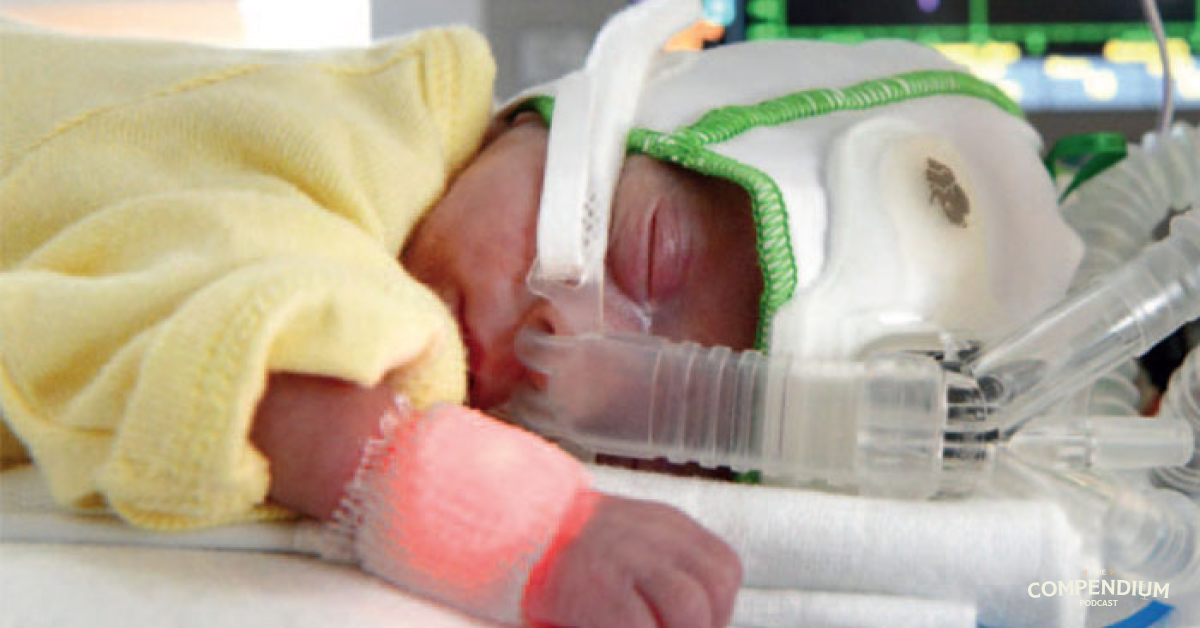
Another uncomfortable theme is the role of technology and human error. Several of the babies at the Countess of Chester were on invasive ventilation — a lifeline that also introduces a long list of ways things can go wrong.
Later reviews raised the possibility that some collapses might have involved ventilator dislodgement, mis-set alarms, or equipment faults. In a unit already criticised for staffing and training issues, that’s not a wild conspiracy theory; it’s an obvious risk.
That risk becomes even harder to ignore when you learn that senior hospital managers have reportedly been arrested on suspicion of corporate manslaughter in connection with the wider care failures at the hospital. Allegations include ignoring or sidelining consultants who raised concerns and failing to act on warnings about safety in the neonatal unit.
If a system is that compromised, you have to ask:
How many events that were later labelled as “unexplained” might actually have been the result of ordinary — if devastating — hospital negligence?
Murder, Miscarriage of Justice, or a Catastrophic Collapse?
This is where the Letby story stops being a straightforward true-crime tale and turns into something much more disturbing.
If Lucy Letby is guilty of what she was convicted of, then the horror is obvious: a nurse exploiting a broken system to harm babies under the cover of chaos.
But if some of those collapses were actually caused by medical errors mistaken for murder, or if the evidence was too fragile to support the conclusions drawn from it, the horror shifts. It becomes a story about how desperate we are for a villain when faced with unbearable tragedy — and how willing institutions can be to focus on a single individual instead of their own systemic failures.
For families and staff caught in this, the question “is Lucy Letby innocent?” isn’t abstract. It cuts right through their grief and identity. If the case is later found to be a miscarriage of justice, that doesn’t just rewrite the story of one nurse; it rewrites the story of every parent who was told what happened to their child.
We may never get a version of events that satisfies everyone. But as inquiries continue and expert reviews dig deeper into what caused the Chester baby deaths, one thing is clear: what happened at the Countess of Chester neonatal unit cannot be explained by a courtroom verdict alone.
Listen to “Lucy Letby: What Really Happened?” on The Compendium Podcast
If you want to go further into the evidence, the expert reports, the ventilator theories and the hospital’s own failures, you can dive into our full audio investigation: “Lucy Letby: What Really Happened?” on The Compendium podcast.
In the episode, we unpack the case in detail, explore competing explanations for the collapses, and walk through how a stressed neonatal unit became the centre of one of the UK’s most haunting medical scandals.
Listen to the linked episode
Related episodes
West Memphis Three: Paradise Lost, Justice Lost, Innocence Lost
The West Memphis Three story is a nightmare of panic, pressure, and vanished evidence, where a confession mattered more than truth. In 1993, three eight-year-old boys vanished in West Memphis, Arkansas, then turned up murdered in Robin Hood Hills. As the Satanic Panic crept into the investigation, police chased a satanic ritual narrative and built a case around Damien Echols, Jason Baldwin, and Jesse Misskelley, fuel...
The Suffolk Strangler: Steve Wright The Man Who Made the Road Home a Nightmare
The Suffolk Strangler turned Ipswich into a locked-door city. Five women vanish from the red light district and the road home becomes a crime scene. In December 2006, the Ipswich murders unfold at terrifying speed as five women are found dumped on rural roads outside the town. Panic turns the streets silent, while the women at the centre of the story are reduced to headlines instead of humans. Inside Operation Sumac,...
Hillside Strangler: Murder in the Shadows of Los Angeles
Two men stalk Los Angeles at night, dumping bodies across the hills as police scramble to understand a pattern of terror unfolding in plain sight. This episode examines the Hillside Stranglers case, following Kenneth Bianchi and Angelo Buono as their murders gripped Los Angeles in the late 1970s. We explore how victims were selected, the pressure mounting on investigators, the bizarre multiple personality defence att...
Related posts

True crime
The Unsolved Mystery of Jennifer Fairgate The Woman with No Past
This guide explains the Jennifer Fairgate mystery for readers seeking a clear timeline, verified evidence, and the strongest theories still debated today.
Read postJoin the Patreon
Get ad-free listening, early access, bonus archive drops, and your private RSS feed without switching apps.