


EPISODE 72
13 August 2024
Julie d'Aubigny: The Sword Fighting Opera Singing, Kick Ass Feminist of the 17th Century!
Listen On
0:00
The Compendium Podcast
Julie d’Aubigny or more famously known by her stage name La Maupin, was born around 1673 into a world that seemed determined to mold her into a conventional woman of her time.
However, from a young age, it was clear that Julie d’Aubigny was anything but conventional. Raised in a well-off family in 17th century France, her father, Gaston d’Aubigny, served as the Master of the Horse to King Louis XIV. His role included training the pages in swordsmanship, and Julie quickly became an adept pupil, learning to fence, ride, and handle herself in a male-dominated world.
Her education was not limited to these skills alone. Growing up surrounded by men, Julie adopted many of their habits, including drinking, gambling, and brawling. Most strikingly, she often dressed in men’s clothing, a choice that she maintained throughout her life, challenging the gender norms of the time.
Despite her independent spirit, societal expectations caught up with her, and she was married off to Sieur de Maupin, a man chosen more for his calm demeanor than any compatibility with Julie’s fiery nature. The marriage did little to curb her wild ways. Not long after, Julie became involved with a fencing master who was on the run after killing a man in a duel. Together, they fled the city and made a living performing fencing exhibitions. Julie’s prowess with the sword soon outshone her lover’s, leading her to continue her journey alone, honing her skills and gaining a reputation as a formidable duelist.
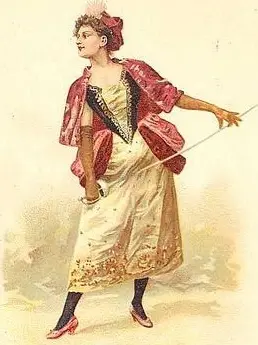
As La Maupin traveled across France, her performances became the stuff of legend. In towns and villages, she would draw crowds by singing and then challenging any man in the audience to a duel. Those who accepted often regretted it, as Julie not only defeated them but also humiliated them with scathing songs tailored to their weaknesses.
One of her most audacious acts during this period involved her stripping off her shirt during a duel to prove her womanhood when her gender was questioned. This bold move silenced skeptics and solidified her reputation as a fearless and unconventional woman.
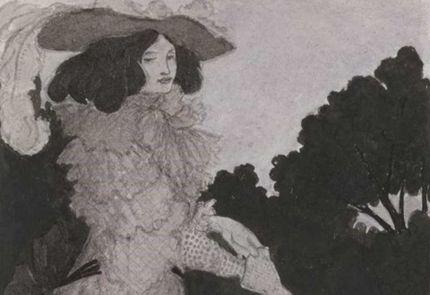
Julie’s romantic entanglements were as daring as her dueling. After leaving her sword master, she became romantically involved with the daughter of a wealthy merchant. When the girl's father sent her to a convent to end the affair, Julie refused to be deterred. She joined the convent under the guise of taking holy orders, but her true intent was to continue their relationship.
The affair escalated when an elderly nun died, presenting Julie with an opportunity for a dramatic escape. She placed the nun’s body in her lover’s bed, set fire to the convent, and fled with the young woman. Their time together, however, was brief, as Julie soon grew bored and returned her lover to her family’s doorstep. For this escapade, she was sentenced to burn at the stake for kidnapping and arson. Yet, once again, she leveraged her connections, and the ever-amused King Louis XIV granted her a pardon.
After this brush with the law, Julie headed to Paris, where she began singing to support herself. Her musical talents quickly gained her recognition, but it was her fearlessness that continued to make her legendary. One evening, after a performance, a drunken man insulted her, prompting her to challenge him to a duel. True to form, Julie defeated him but later visited him to check on his condition. Remarkably, this encounter led to a romantic relationship, and the two remained close friends for life, even after their romance ended.
This was just one of many such episodes that cemented Julie's reputation as both a dangerous swordswoman and a compassionate, albeit unconventional, individual.
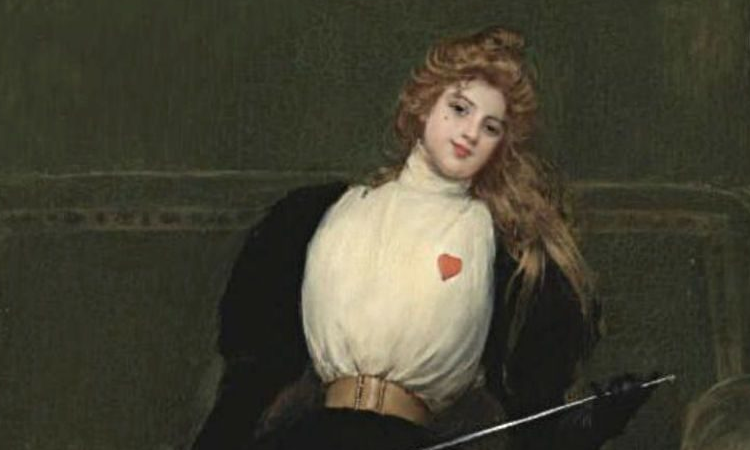
Julie’s journey eventually led her to the Paris Opéra, the most prestigious opera house in the world at the time. Initially rejected, her talents were undeniable, and she soon became one of its leading stars. The opera singers of this era were akin to modern-day rock stars, and Julie’s androgynous beauty, coupled with her incredible voice, captivated audiences. Her passionate nature, however, meant that her time at the Opéra was far from peaceful.
Julie was known to both seduce and quarrel with her colleagues. In one notable incident, she confronted a fellow actor who had been making disrespectful comments about their female peers. When he refused to duel her, she beat him with a cane and humiliated him by exposing his cowardice to their colleagues. This blend of talent and audacity made her both loved and feared within the opera community.

One of the most famous episodes in Julie d'Aubigny life occurred at a royal ball. Dressed in her usual men’s attire, she openly courted a young woman, culminating in a passionate kiss in front of the entire gathering. This scandalous act infuriated three gentlemen, who challenged her to a duel. Julie, undaunted, defeated all three, leaving them bleeding and humiliated. Although King Louis XIV was amused enough to pardon her once more, the increasing severity of anti-dueling laws prompted Julie to leave France temporarily.
She fled to Brussels, where she continued her opera career and her escapades. During this time, she took on a long-term lover, Madame la Marquise de Florensac, one of the few relationships that seemed to bring Julie some measure of peace.
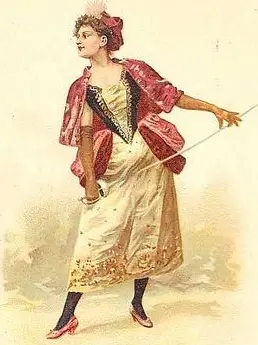
Julie’s relationship with the Marquise de Florensac marked a rare period of stability in her otherwise tumultuous life. After the Marquise's untimely death, Julie’s life becomes less well-documented. It is believed that she eventually reunited with her long-forgotten husband and lived out her final years in relative peace in Paris. She died around 1707, at the age of 37, from causes unknown.
Julie d’Aubigny, La Maupin, was a woman who defied the expectations and limitations of her time. Her life was a testament to the power of individuality, courage, and passion. She lived on her own terms, challenging societal norms at every turn, and left behind a legacy that continues to fascinate and inspire. Whether as a duelist, a lover, or an opera star, La Maupin remains one of history’s most extraordinary figures—a true icon of defiance and brilliance
13 August 2024
Listen On
A young artist survives unimaginable pain and transforms it into paintings so bold and intimate they redefine what art can be. This episode explores Frida Kahlo’s turbulent life, from the accident that reshaped her body to the politics, passion, and creative defiance that fuelled her work. We trace her self-portraits, her fractured relationship with Diego Rivera, and the way she turned personal suffering into a visua...
A fairy-tale romance unravels almost instantly, leaving a young woman trapped between duty, loneliness, and a love story that was never built to survive. This episode traces Diana’s early life and whirlwind engagement to Charles, revealing how Royal expectations, emotional distance, and the presence of Camilla Parker Bowles shattered the illusion of a perfect match. We explore her childhood influences, the pressures...
On today's episode of The Compendium: An Assembly of Fascinating and Intriguing Things, while Adam takes a break this week, we take a look into the life of the ledgend; Dolly Parton with our guest for this week Lizzie Evans. Today I tell Lizzi about a pioneering spirit and an undeniable icon in the realm of country music. From her early days in Tennessee to her groundbreaking hits like "Nine to Five," we explore how...
Get ad-free listening, early access, bonus archive drops, and your private RSS feed without switching apps.